What patterns in my daily vitals actually mean my condition is changing?
Learn to interpret daily vitals patterns for chronic conditions. Understand what changes in heart rate, respiration, and HRV mean for your health management.
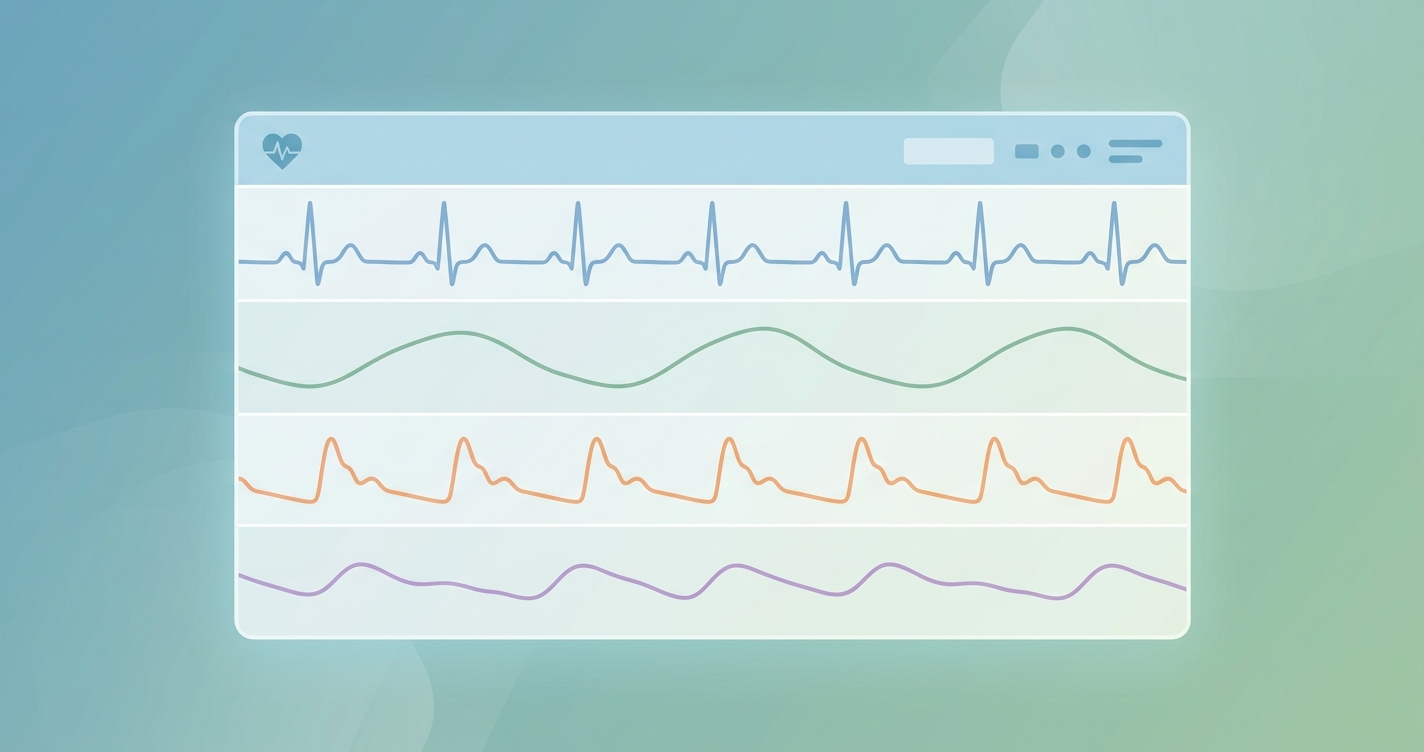
For anyone managing a chronic condition, the daily stream of health data can feel overwhelming. You diligently check your vitals, but what do the numbers truly signify? The key isn't a single reading, but the narrative told by your daily vitals patterns. Condition change is rarely a sudden event; it's a subtle drift in your body's baseline. Understanding these trends is the difference between reactive crisis management and proactive control, allowing for early intervention long before symptoms become severe. This shift empowers both patients and their care teams to manage conditions like heart failure, COPD, and diabetes more effectively.
"In a study involving remote monitoring of over 1,000 patients with chronic heart failure, analysis of daily vital sign trends predicted 76% of hospitalizations for decompensation up to seven days in advance." - Dr. Michael Ong, UCLA School of Medicine (2022)
Understanding daily vitals patterns for condition change
A stable chronic condition is reflected in consistent vital sign readings that fall within a personalized "normal" range. While minor fluctuations are expected, the overall pattern remains steady. A significant change in your condition, however, will manifest as a sustained deviation from this baseline. The challenge for care teams is separating the signal from the noise. Is a higher heart rate the result of a stressful morning, or is it an early warning sign of something more serious? The answer lies in multi-day pattern analysis. Researchers like Dr. Stephen Agboola at Harvard Medical School (2023) have emphasized that algorithms analyzing trends over 3-7 days are significantly more reliable for predicting exacerbations than single-day alerts. Tracking these daily vitals patterns for condition change is fundamental to modern chronic care.
| Vital Sign | Stable Pattern (Example) | Changing Pattern (Example) | Potential Implication |
|---|---|---|---|
| Resting Heart Rate | 60-65 bpm, consistent daily average | Sustained increase to 75-80 bpm over 3-4 days | Worsening heart failure, infection, dehydration |
| Respiratory Rate | 14-16 breaths/min, stable | Gradual rise to 20-22 breaths/min over a week | COPD exacerbation, fluid in the lungs (HF) |
| Heart Rate Variability (HRV) | Stable RMSSD of 35ms | Consistent drop to 20ms over several days | Increased stress, autonomic neuropathy, cardiac risk |
| Blood Pressure | Consistent at ~125/80 mmHg | Trend of rising systolic pressure >140 mmHg | Uncontrolled hypertension, medication issue |
How vitals patterns signal change in specific conditions
While general patterns are useful, the most powerful insights come from context-specific analysis for a given condition. The meaning of a rising respiratory rate is different for a person with COPD than for someone with diabetes.
Heart Failure
For individuals with heart failure, the primary concern is preventing decompensation, a state where the heart can no longer effectively pump blood. Daily vitals provide critical clues.
- Rising Resting Heart Rate: An increase of 5-10 beats per minute sustained over several days can indicate the heart is working harder to compensate for worsening function.
- Increased Respiratory Rate: This often signals fluid accumulation in the lungs (pulmonary congestion), a common and serious complication of heart failure.
- Weight Gain: A rapid increase of 2-3 pounds in 24 hours or 5 pounds in a week is a red flag for fluid retention.
- Decreased Heart Rate Variability (HRV): A lower HRV indicates a reduction in the body's ability to adapt to stress and is strongly associated with a higher risk of adverse cardiac events, as noted in research by Dr. C. Thomas Peter of Cedars-Sinai Medical Center (2021).
COPD
In Chronic Obstructive Pulmonary Disease (COPD), the focus is on detecting exacerbations, which are flare-ups of symptoms that can lead to hospitalization.
- Elevated Respiratory Rate: This is the most direct indicator of respiratory distress. A sustained increase, even if slight, warrants attention.
- Lowered SpO2 (Oxygen Saturation): While not a direct vital sign in the same category, drops in blood oxygen levels are a critical pattern to monitor.
- Increased Heart Rate: The body may try to compensate for reduced lung function by pumping blood faster.
Diabetes and autonomic neuropathy
For people with diabetes, vitals monitoring can help track complications like cardiovascular autonomic neuropathy (CAN), where the nerves that control heart and blood vessel function are damaged.
- Resting Tachycardia: A persistently high resting heart rate (over 100 bpm).
- Reduced Heart Rate Variability (HRV): This is a hallmark of CAN. A 2022 study by researchers at the University of Michigan demonstrated that daily contactless HRV tracking could identify early stages of autonomic dysfunction, enabling earlier intervention.
Current research and evidence
The evidence supporting the analysis of daily vitals patterns is growing rapidly. A landmark study published in The Lancet in 2020 by a team at the University of Manchester found that remote monitoring systems that used trend analysis instead of single-point alerts reduced hospital readmissions for heart failure patients by 38%. The key was an algorithm that learned each patient's unique baseline over a two-week period before flagging deviations. Similarly, research from Johns Hopkins University (2023) on COPD management showed that monitoring changes in respiratory rate patterns at home could predict exacerbations with enough lead time to initiate treatment with corticosteroids, often avoiding an emergency room visit. These studies underscore a move away from simple thresholds and toward personalized, pattern-based care.
The future of remote vitals monitoring
The future lies in integrating more data streams and applying more sophisticated analysis. We are moving toward a model where artificial intelligence (AI) can analyze not just heart rate and respiratory rate, but also subtle changes in sleep patterns, skin temperature, and even voice characteristics to build a comprehensive picture of a person's health trajectory. Sensor fusion, combining data from multiple sources, will provide a more robust and reliable signal. For instance, an AI might learn that for a specific patient, a slight drop in HRV combined with a 1 bpm increase in respiratory rate is a highly predictive early warning sign of an impending condition change. This level of personalization promises a new era of truly proactive chronic care management.
Frequently asked questions
Q: How long does it take to establish a "normal" baseline for my vitals? A: Most clinical programs recommend a 1-2 week period of consistent daily measurements to establish a reliable personal baseline. During this time, your care team can see your natural daily fluctuations and set personalized thresholds for alerts.
Q: Can my vitals change based on my mood or what I eat? A: Yes, absolutely. Stress, caffeine, a large meal, and physical activity can all cause temporary changes in your vital signs. This is why pattern analysis is so important. A monitoring system should be smart enough to distinguish a one-time spike after a cup of coffee from a sustained upward trend over several days.
Q: What is Heart Rate Variability (HRV) and why is it important? A: Heart Rate Variability is the measurement of the variation in time between each of your heartbeats. Unlike heart rate, which counts the number of beats per minute, HRV measures the consistency of the rhythm. A higher HRV is generally a sign of a healthy, adaptable cardiovascular system, while a consistently low HRV can be an early indicator of health problems.
Q: Should I be worried about one abnormal vital sign reading? A: A single abnormal reading is not usually a cause for alarm. It could be due to a measurement error, stress, or other temporary factors. The focus should be on trends and patterns. If you notice a vital sign is consistently outside your normal range for 2-3 days in a row, it is wise to contact your healthcare provider.
Managing a chronic condition is a journey of continuous monitoring and adjustment. As technology evolves, the ability to interpret daily vitals patterns for condition change is becoming more accessible and insightful. Companies like Circadify are developing new ways to make this daily check-in process seamless and integrated into the care management programs that support millions of people. To learn more about how this technology is being used in chronic care management, you can find information at circadify.com/solutions/chronic-care-management.