How Remote Monitoring Supports Palliative Care at Home
An analysis of how remote monitoring supports palliative care at home through symptom visibility, caregiver support, and lower-friction care coordination.
How Remote Monitoring Supports Palliative Care at Home
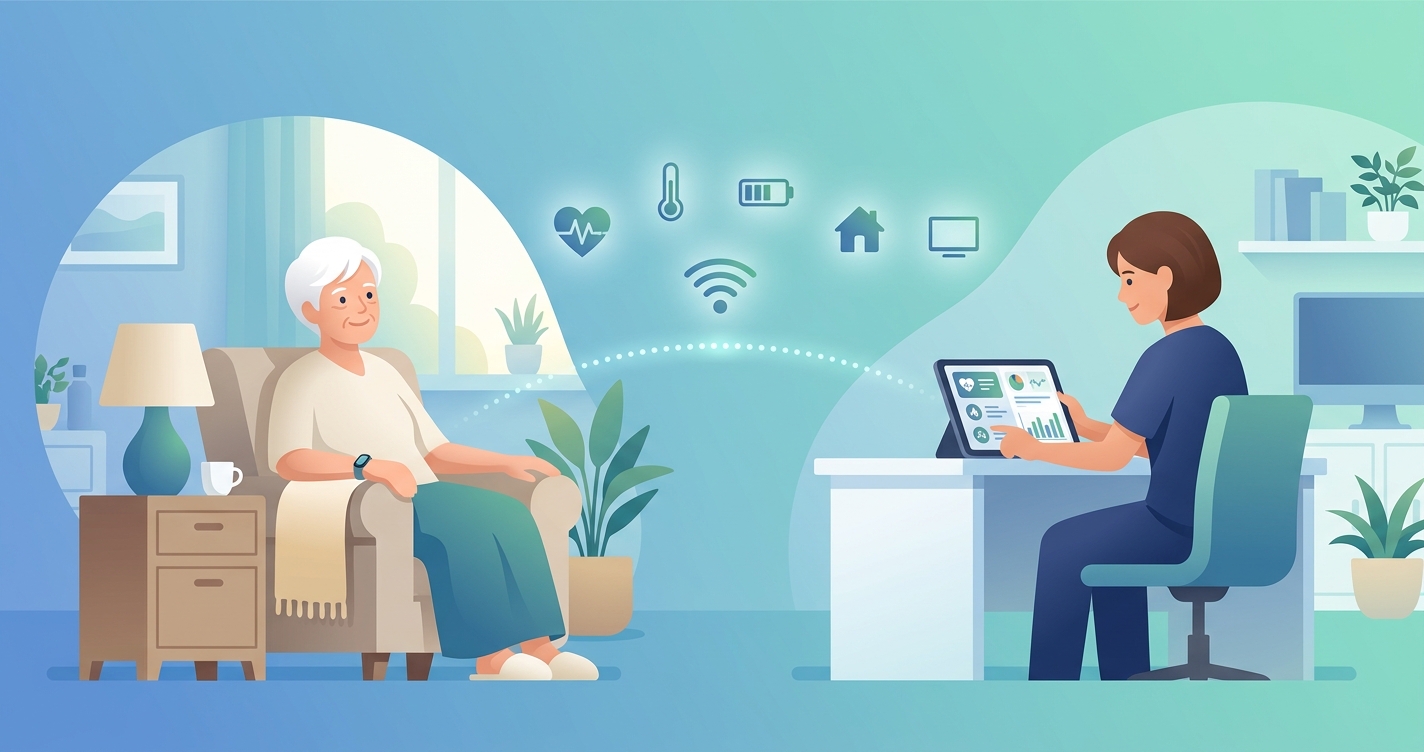
Remote monitoring palliative care home programs are getting more attention for a simple reason: serious illness care now happens across longer stretches of time, with more of it taking place in the home and less of it inside a clinic. That shift sounds humane, and often it is. But it also creates a visibility problem. Nurses, physicians, and care coordinators cannot help with symptom burden, medication changes, or caregiver stress if they only hear about trouble after a crisis call or an emergency visit.
"Globally, only about 14% of people who need palliative care currently receive it." — World Health Organization, palliative care fact sheet
Why remote monitoring matters in palliative care at home
Palliative care at home is supposed to reduce friction for patients with advanced illness. In reality, it often moves the workload around. Travel falls, but families take on more observation. Scheduled visits help, but symptoms still change between touchpoints. That is where remote monitoring becomes useful. It does not replace clinical judgment or family caregiving. It gives both a steadier stream of signal.
The World Health Organization estimates that 56.8 million people need palliative care each year, while only a small fraction receive it. That gap matters even more in home settings, where access problems, workforce shortages, and distance all make continuous follow-up harder.
A 2021 rapid review on telehealth delivery of palliative care to remote communities found that telehealth improved access, reduced travel burden, and strengthened communication between patients, families, and interdisciplinary teams. Those benefits sound operational because they are. Home palliative care works better when information moves quickly and clinicians can respond before a bad day turns into a hospitalization.
| Home palliative care question | Traditional home follow-up | Remote monitoring-supported model |
|---|---|---|
| How are symptoms tracked between visits? | Phone calls and caregiver memory | Ongoing symptom check-ins and trend review |
| When does the team learn about change? | Often after symptoms escalate | Earlier, when patterns begin to shift |
| How are caregivers supported? | Mostly during scheduled outreach | More targeted outreach when burden or symptom signals rise |
| Which patients need escalation first? | Based on diagnosis and intuition | Based on diagnosis plus current symptom and engagement data |
| What helps keep care at home? | Good intentions and visit scheduling | Good intentions plus timely visibility |
What remote monitoring actually adds to palliative care workflows
In palliative care, the useful question is not whether technology can collect data. It can. The more important question is whether the data helps the care team act sooner and with less guesswork.
That usually means four things:
- symptom changes become visible before the next routine visit
- caregivers do not have to carry the full burden of remembering and reporting every change
- triage gets more specific, because the team can see who is stable and who is drifting
- patients who want to remain at home have a better chance of staying there safely
I keep coming back to that last point. The promise of home-based palliative care is not just comfort. It is continuity without unnecessary disruption. Monitoring helps protect that continuity.
The evidence on remote monitoring in palliative care at home
Recent research is more practical than flashy, which is probably a good sign.
Roma Maguire, Lisa McCann, Claire Singleton, Paul Perkins, Ollie Minton, and colleagues evaluated the CARE-PAC remote monitoring system across five UK clinical sites in a 2025 mixed-methods feasibility study. The cohort included 26 participants, or 13 patient-carer dyads. Overall quality-of-life scores did not dramatically shift, but patients showed improvement in overall and social quality-of-life domains, and usability scores were high among both patients and carers. That matters because home palliative care tools fail quickly when they add work to people who are already stretched thin.
Another thread comes from oncology palliative care. Joseph Greer, Jennifer Temel, and colleagues reported in the REACH PC trial that early palliative care delivered by telehealth produced quality-of-life and symptom outcomes similar to in-person care for 1,250 patients with advanced non-small cell lung cancer across 22 US sites. The point is not that every palliative interaction should move online. It is that virtual models can preserve meaningful clinical benefit when the alternative is less access.
The literature on home-based palliative care economics points in the same direction. Systematic reviews cited by the National Alliance for Care at Home and other researchers have found that home-based palliative care can reduce hospital use and overall healthcare costs, especially near the end of life. Lower utilization is not the goal by itself, but it usually signals something important: more problems are being managed in the right setting rather than the most expensive one.
Which signals are most useful in palliative care at home
Palliative care monitoring is broader than traditional RPM. The care team is not just watching blood pressure or pulse. They are trying to understand whether the patient is comfortable, whether function is changing, and whether the caregiver situation is becoming unsustainable.
Common monitoring targets include:
- pain intensity and pain interference
- breathlessness and respiratory distress
- fatigue, sleep disruption, and declining activity
- appetite, nausea, and hydration concerns
- mood, anxiety, and signs of distress
- caregiver burden and confidence
- adherence to check-ins or symptom reporting
- selected vital signs when clinically useful
That mix is important. In palliative care, one number rarely explains the situation. A patient may have stable pulse and oxygen saturation but worsening pain, confusion, or family stress. Good home monitoring respects that complexity instead of flattening it.
Readers looking at adjacent home-care workflows may also want our analysis of post-discharge monitoring to prevent readmissions and how contactless monitoring supports heart failure care at home.
Industry applications
Serious illness programs trying to keep patients at home
These programs use remote monitoring to spot the patients who need same-day outreach. The value is not constant surveillance. It is quicker recognition of symptom burden and functional decline.
Palliative care teams covering large geographies
Rural and distributed care models benefit when telehealth and monitoring reduce travel demands on both families and clinicians. The 2021 rapid review on remote communities made this point clearly: access improves when the care model does not depend entirely on in-person encounters.
Health systems managing caregiver strain
Caregiver burden is often the hidden driver of avoidable escalation. Reviews of caregiver burden in palliative care show high rates of moderate strain, especially when families lack support, sleep, or time away from care tasks. Monitoring that includes caregiver check-ins can reveal trouble before burnout forces a crisis transfer.
Current research and evidence
Several findings are especially relevant for remote monitoring in palliative care at home:
- The World Health Organization reports that 56.8 million people need palliative care each year, while only about 14% currently receive it.
- The 2021 rapid review "Leveraging Telehealth for Delivery of Palliative Care to Remote Communities" found that telehealth improved access, reduced travel burdens, and supported interdisciplinary coordination in remote settings.
- Roma Maguire and colleagues reported in 2025 that the CARE-PAC remote monitoring system was highly usable for patients and carers, with mean usability scores of 87.9 for patients and 94.7 for carers.
- Joseph Greer, Jennifer Temel, and colleagues found in the multisite REACH PC trial that telehealth palliative care delivered outcomes similar to in-person care for 1,250 patients with advanced lung cancer.
- Reviews of home-based palliative care economics consistently show lower hospital use and lower total costs, especially in the final months of life.
The pattern here is pretty clear. Home palliative care does better when it is easier to see what is happening between visits.
The future of remote monitoring palliative care home models
The next wave of palliative monitoring will probably be lighter, not heavier. I do not think families want a house full of devices. Most clinicians do not want another dashboard unless it clearly saves time. The models that last will likely focus on low-friction symptom capture, caregiver check-ins, and selective physiologic monitoring instead of collecting every possible metric.
Three changes seem likely:
Symptom-first monitoring will grow
Palliative care has always been about suffering, not just physiology. Future models will likely put symptom and caregiver reporting at the center, with vitals used when they add context.
Home-based care pathways will become more responsive
As health systems expand hospital-at-home and serious-illness-at-home programs, palliative teams will need ways to triage changes quickly. Monitoring can help sort routine variation from urgent decline.
Lower-friction tools will win
The best system is usually the one patients and carers will actually use. That may mean fewer peripherals, more mobile workflows, and simpler check-ins that fit into ordinary life.
Frequently asked questions
What is remote monitoring in palliative care at home?
It is the use of digital check-ins, telehealth, symptom reporting, and sometimes vital-sign tracking to help clinicians follow patients receiving palliative care at home between scheduled visits.
Does remote monitoring replace in-person palliative care?
No. It supports in-person care by giving clinicians more visibility between visits. Most programs use it to guide outreach, triage, and follow-up rather than to replace bedside care.
What should palliative care teams monitor at home?
Pain, breathlessness, fatigue, appetite, sleep, mood, caregiver burden, and adherence to check-ins are often the most useful signals. Vital signs can help, but they are only part of the picture.
Why does remote monitoring help caregivers?
It can reduce the pressure to remember every detail until the next appointment and gives care teams earlier notice when strain, symptom burden, or function is worsening.
Home palliative care only works when the clinical team can stay connected without overwhelming patients and families. That is why lower-friction monitoring models matter. Solutions like Circadify's chronic care management workflows are part of that broader shift toward easier check-ins, better visibility, and more responsive care outside the clinic.