Remote Monitoring for Long COVID Patients: How It Helps
An analysis of how remote monitoring for long COVID patients supports symptom tracking, escalation decisions, rehabilitation planning, and lower-friction follow-up between visits.
Remote Monitoring for Long COVID Patients: How It Helps
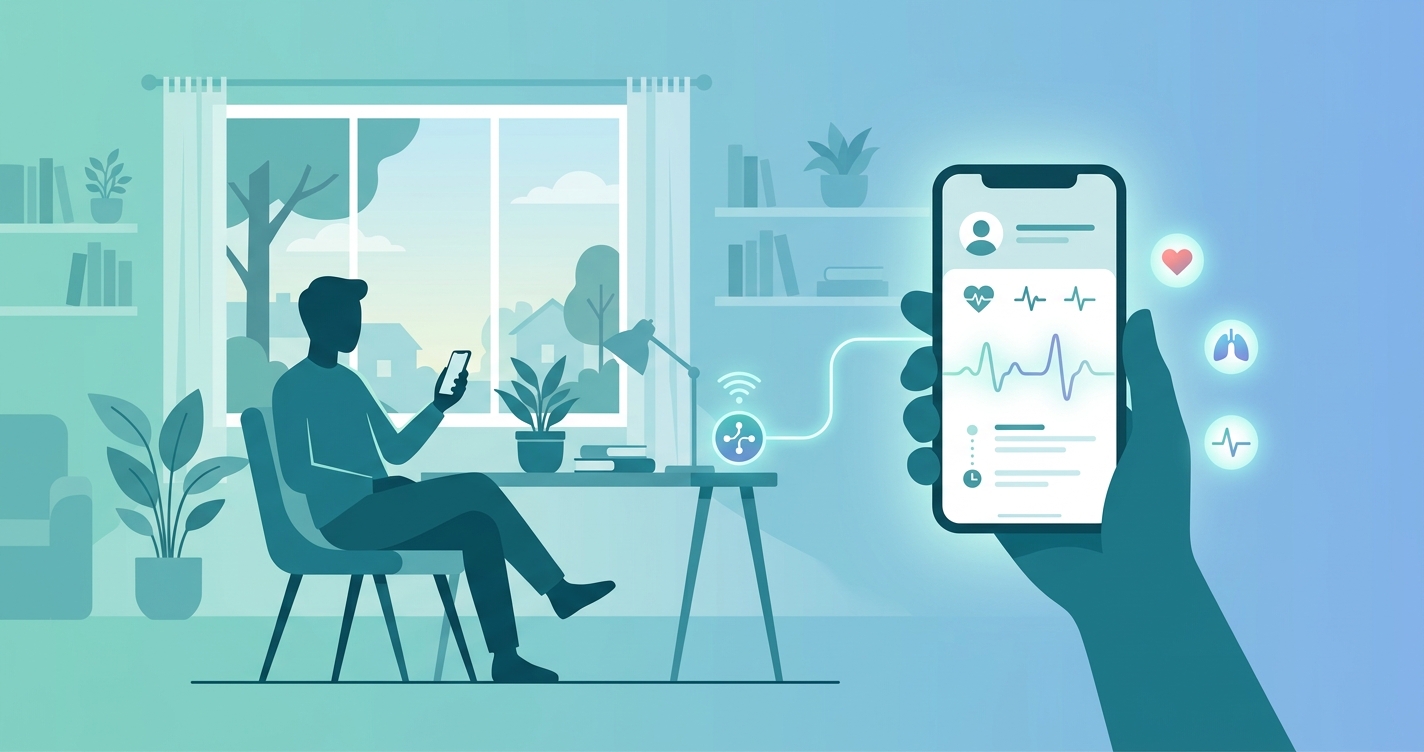
Remote monitoring for long COVID patients is getting more attention for a simple reason: this condition rarely behaves like a short, linear recovery. Symptoms can drift for weeks, flare after exertion, then settle down again just enough to make a clinic snapshot misleading. For chronic care teams, that creates a familiar problem. The patients who need the most follow-up often have variable symptoms, fragmented care, and long gaps between in-person visits. A remote monitoring model does not solve long COVID by itself, but it gives clinicians a steadier view of what is happening between appointments.
"Long COVID is often multisystemic and fluctuating, which makes longitudinal monitoring more useful than isolated encounters." — summarized from the 2023 scoping review on remote patient monitoring for long COVID indexed in PubMed Central
Why remote monitoring for long COVID patients fits the condition itself
Long COVID is difficult to manage because the symptom burden is broad and the timeline is inconsistent. The CDC reported in 2024 that 6.4% of noninstitutionalized U.S. adults had experienced long COVID in 2023, and nearly one in five of those adults reported significant activity limitation. That is a large population carrying a condition that often includes fatigue, dyspnea, palpitations, sleep disruption, orthostatic symptoms, exercise intolerance, and cognitive complaints.
A normal office visit can capture only part of that picture. Remote monitoring is useful because it follows patterns rather than moments. Instead of asking whether a patient looks stable at 2 p.m. on a Tuesday, the care team can review what happened across the last seven, 14, or 30 days.
Researchers studying long COVID have increasingly focused on the same operational question: which signals are worth watching over time? The answer is not limited to one metric, but several markers keep appearing in the literature:
- Resting heart rate trends
- Respiratory rate trends
- Oxygen saturation in selected patients
- Sleep and activity tolerance
- Heart rate variability in autonomic dysfunction research
- Symptom surveys tied to fatigue, dizziness, chest symptoms, and post-exertional malaise
A 2024 review of cardiovascular autonomic dysfunction in long COVID noted that heart rate variability abnormalities are common in this population and may reflect autonomic imbalance. Another long-COVID HRV study indexed by PubMed found reduced cardiac autonomic modulation and increased sympathetic activity in affected patients. Those findings matter because many long COVID complaints that look subjective in isolation start to make more sense when paired with repeated physiologic signal.
| Monitoring approach | What it captures well | Where it helps most in long COVID | Main limitation |
|---|---|---|---|
| Symptom questionnaires alone | Fatigue, brain fog, dizziness, PEM, functional change | Routine follow-up and rehabilitation check-ins | Symptoms can be hard to compare across days |
| Pulse oximetry spot checks | Oxygen saturation and exertional desaturation | Dyspnea-focused patients and escalation review | Not every long COVID patient has a persistent oxygen issue |
| Wearable or passive trend monitoring | Heart rate, sleep, activity, HRV trends | Dysautonomia, exertional intolerance, pacing decisions | Adherence can fade if hardware is burdensome |
| Contactless camera-based check-ins | Low-friction repeated vitals capture | Ongoing home follow-up without device fatigue | Best used as part of workflow, not as a stand-alone answer |
| Hybrid remote monitoring model | Symptoms plus vitals plus clinician review | Higher-risk or more variable patients | Requires staffing and escalation rules |
What remote monitoring actually changes in care delivery
The clearest benefit is not constant surveillance. It is better timing.
Long COVID patients often describe cycles that clinicians miss unless they happen to visit during a flare. Remote monitoring shortens that blind spot. When teams can see repeated symptom scores, daily check-ins, or changing vital sign trends, they can sort patients more intelligently.
That helps in several ways:
- It identifies patients whose symptoms are drifting rather than improving
- It highlights post-exertional crashes that might otherwise be written off as isolated bad days
- It gives rehabilitation teams a better basis for pacing and follow-up cadence
- It helps decide who needs in-person workup, medication review, or referral escalation
- It creates documentation for chronic care programs managing a population over time
This is especially relevant for buyers in chronic care management and value-based care. Long COVID does not always fit neatly into a single specialty lane. Patients may move between primary care, pulmonology, cardiology, rehab, and behavioral health. A remote monitoring layer gives the care model some continuity even when the clinical ownership is split.
For a broader chronic-care operations view, see our posts on how value-based care organizations use daily vitals data and how to scale a chronic care monitoring program.
Industry applications for long COVID monitoring programs
Post-acute follow-up after hospitalization or severe infection
Some health systems use remote follow-up to watch patients after discharge when breathlessness, tachycardia, or low activity tolerance remain concerns. In these cases, monitoring helps teams see whether the patient is gradually stabilizing or moving back toward acute utilization.
Ambulatory recovery programs
Many long COVID patients were never hospitalized, yet they still develop prolonged functional impairment. Ambulatory programs can use remote symptom tracking and periodic vitals review to decide who needs pulmonary rehab, autonomic evaluation, medication review, or a more conservative pacing plan.
Dysautonomia-oriented care pathways
The autonomic dysfunction literature around long COVID keeps growing. HRV research and wearable studies suggest that repeated heart-rate patterns may help identify patients whose fatigue and exercise intolerance are linked to autonomic disturbance. Remote monitoring does not diagnose dysautonomia on its own, but it gives clinicians more trend data before formal testing.
CCM and population-health workflows
For chronic care operators, long COVID is also a workflow problem. Patients may require months of outreach without wanting another device to charge or wear. Lower-friction monitoring models can reduce dropout and support larger caseloads, especially when care managers need a quick way to identify whose status changed.
Current research and evidence
The research base is still evolving, which is worth saying plainly. Long COVID care has moved faster than the evidence hierarchy. Even so, several findings are already useful.
A 2023 scoping review of remote patient monitoring for long COVID, available through PubMed Central, described a growing mix of telemonitoring models built around symptoms, pulse oximetry, wearables, and virtual follow-up. The review's practical takeaway was that longitudinal monitoring is feasible, but programs vary widely in what they track and how they escalate care.
CDC surveillance published in MMWR in 2024 showed that long COVID remains common and functionally significant in the United States. That scale matters for care design. A condition affecting millions of adults cannot be managed only through specialty visits.
On the physiology side, authors writing in 2024 and 2025 on cardiovascular autonomic dysfunction in long COVID reported recurrent HRV abnormalities and signs of sympathovagal imbalance. Those papers help explain why repeated heart-rate and recovery patterns may be useful, particularly for patients reporting palpitations, orthostatic symptoms, or post-exertional worsening.
There is also an important caution in the evidence. Agent-search results surfaced a 2024 review of COVID-era remote monitoring programs showing that telemonitoring studies often lacked randomized control groups and used inconsistent protocols. That does not mean remote monitoring is unhelpful. It means buyers should be skeptical of simple claims and focus on whether the workflow is clinically disciplined.
In practice, the best-supported model usually includes three pieces:
- A repeatable patient check-in process
- Trend review by a real care team
- Clear escalation pathways when symptoms or vitals worsen
The future of remote monitoring for long COVID patients
The next phase probably will not be a single long COVID device category. It will be better segmentation.
Some patients need symptom-led follow-up. Others need cardiopulmonary trend review. Others need rehab-oriented pacing support. The monitoring stack should reflect that reality rather than forcing every patient into the same protocol.
Three shifts look likely over the next few years.
Monitoring will become more phenotype-specific
Long COVID is an umbrella term. Programs will likely separate respiratory-predominant patients, autonomic-dysfunction patients, and fatigue or PEM-heavy patients into different follow-up tracks.
Low-friction capture will matter more than hardware intensity
Many patients with chronic symptoms already feel overburdened. Monitoring that works through familiar devices and brief check-ins will probably outperform complicated device kits in long-duration programs.
Chronic care infrastructure will absorb more of the work
As health systems stop treating long COVID as a temporary overflow issue, more of the management burden will move into chronic care, care management, and value-based operations. That makes remote monitoring less of a pandemic leftover and more of an ongoing service model.
Frequently Asked Questions
Why is remote monitoring useful for long COVID patients?
Because long COVID symptoms fluctuate. Remote monitoring helps clinicians see repeated symptom and vital-sign trends between visits instead of relying on a single appointment snapshot.
What should clinicians monitor in long COVID?
That depends on the patient, but common elements include symptom scores, resting heart rate, respiratory rate, oxygen saturation in selected cases, sleep and activity tolerance, and sometimes HRV-related signals when autonomic dysfunction is suspected.
Does pulse oximetry alone solve long COVID monitoring?
No. Pulse oximetry can be useful for some patients with dyspnea or exertional desaturation, but long COVID often involves fatigue, autonomic symptoms, and functional instability that require a broader monitoring model.
Can long COVID fit into chronic care management workflows?
Yes. For organizations already managing longitudinal outreach, remote monitoring can support triage, follow-up scheduling, escalation decisions, and documentation for patients whose symptoms persist across months.
Remote monitoring works best when it gives long COVID patients a steadier clinical connection without adding yet another burden at home. That is why chronic care teams are looking for lighter-touch models that capture useful daily signal while fitting into broader follow-up workflows. Solutions such as Circadify's chronic care management platform are being built for that kind of lower-friction monitoring approach.