What Is the Patient Experience of Daily Contactless Health Checks?
An analysis of the patient experience of daily contactless health checks, from convenience and adherence to trust, workflow fit, and device fatigue.
What Is the Patient Experience of Daily Contactless Health Checks?
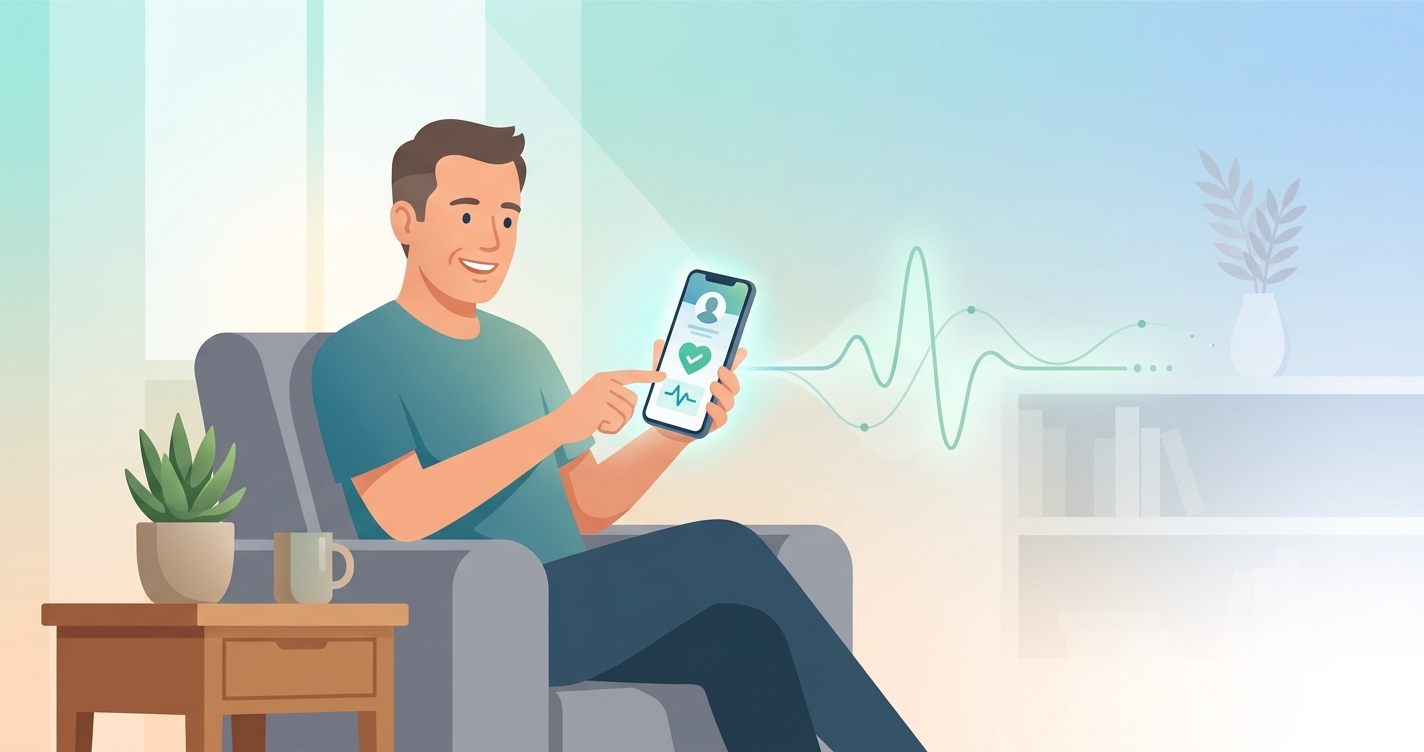
Patient experience daily contactless checks programs are easy to describe from the clinical side. They give care teams a repeat signal between visits. They make deterioration easier to spot. They lower the odds that a patient quietly drifts for a week before anyone notices. But that is only half the story. The other half is whether patients will actually keep doing the check-ins after day three, day ten, and day thirty. In chronic care, that is the real test. A monitoring model can look elegant on a purchasing slide and still fail if it feels intrusive, confusing, or exhausting in ordinary life.
"Patient experience and staff experience are now measured across service design, care processes, adherence, and outcomes in remote patient monitoring." — Valeria Pannunzio and colleagues, Delft University of Technology and Leiden University Medical Center, 2024
Why patient experience matters in daily contactless health checks
The patient experience of daily contactless health checks is mostly about friction. Not just medical friction, but practical friction. Does the check take less than a minute? Does it happen on a device the patient already owns? Does it feel routine, or does it make the patient feel like they are constantly being tested? Those questions matter because adherence in chronic care is rarely lost in one dramatic moment. It usually fades through small annoyances.
Valeria Pannunzio and colleagues reviewed 158 remote patient monitoring papers in a 2024 Journal of Medical Internet Research systematic review and found that experience measures clustered around service design, care delivery, usage, adherence, and outcomes. That sounds academic, but it points to something simple: patient experience is not a soft side issue. It directly shapes whether the monitoring program produces usable data.
A second signal comes from satisfaction research. In a 2025 JMIR Human Factors study, Malcolm H. Merrill, Susan M. Zbikowski, and Garrett J. Jenkins reported that 88% of surveyed participants found a comprehensive remote care program useful, while 65% said they would recommend it. Michael J. Cantor and colleagues reported similarly strong satisfaction in a 2023 multisite, multiregional RPM survey analysis, where more than 93% of participants said they were satisfied and more than 92% would recommend the program. Those studies were not limited to camera-based monitoring, but they do show the broader rule: people stay with remote care when it feels manageable and worthwhile.
| Patient experience question | Device-heavy daily monitoring | Daily contactless health checks |
|---|---|---|
| What does the patient have to wear or remember? | Often a wearable, charger, sync routine, or peripheral | Usually a short phone or tablet check-in |
| How intrusive does the process feel? | Can feel like another object to manage | Often feels lighter when no extra hardware is needed |
| What affects adherence most? | Charging, pairing, forgetting, discomfort | Simplicity, trust, and how quickly the check fits into routine |
| How visible is health status to the care team? | High when device use is consistent | High when repeat check-ins stay consistent |
| Where does frustration build? | Device fatigue and technical support needs | App flow, timing, and uncertainty about what happens with the data |
That table gets to the practical difference. Patients do not compare technologies the way buyers do. They compare burdens. The easier workflow usually wins.
What patients tend to like about daily contactless checks
There is a reason lower-friction monitoring models keep gaining attention in chronic care. They ask less from the patient.
The most common advantages are straightforward:
- no wearable to charge, ship back, or replace
- fewer steps before a check-in is complete
- easier fit into morning or evening routines
- less physical discomfort than cuffs, clips, or straps
- a stronger sense that monitoring is happening with the patient rather than to the patient
I keep coming back to that last point. A lot of monitoring programs fail because the patient experience feels extractive. The system wants data, but the patient does not always feel a benefit in return. Daily contactless checks work better when patients can see the purpose: easier follow-up, fewer unnecessary visits, and faster outreach when something changes.
This is also where contactless models line up with what chronic care operators already know about engagement. The best program is usually not the one with the most sensors. It is the one people will still use when they are tired, distracted, or not feeling well.
Readers looking at adjacent chronic care workflows may also want our analysis of how CCM programs use contactless vitals for monthly check-ins and how to engage chronic disease patients in self-monitoring.
Where the patient experience can still break down
It would be nice if removing the wearable solved everything. It does not.
Patients still judge daily contactless health checks on a few nonnegotiable points:
- whether the instructions make sense the first time
- whether the app or camera step works consistently
- whether the check-ins happen at a sensible cadence
- whether results lead to action when something looks wrong
- whether the program creates reassurance rather than low-grade anxiety
That last one is easy to miss. Some patients like daily health checks because they feel watched over in a good way. Others start to feel over-monitored. The same workflow can feel calming to one person and annoying to another.
The 2024 systematic review by Pannunzio and colleagues is useful here because it shows how broad patient experience really is. Experience is not only satisfaction scores. It includes adherence behavior, usability, service quality, trust, and whether staff can respond in a way that feels coherent to the patient. If daily contactless checks create signal but no visible care response, the experience starts to feel hollow.
Research on wearable-based fatigue points in a similar direction. In their 2021 Frontiers in Physiology review, Neusa R. Adão Martins, Simon Annaheim, Christina M. Spengler, and René M. Rossi described wearable fatigue monitoring as promising, but the review also made clear that long-term use depends on signal quality, comfort, and real-world practicality. That is not a criticism of wearables so much as a reminder that sustained participation is hard. Contactless workflows are attractive largely because they remove one layer of burden.
Industry applications for patient-centered contactless check-ins
Chronic care management programs
CCM teams need repeat patient visibility without asking people to live like trial participants. Daily contactless checks make sense when organizations want a lighter routine for patients with heart failure, COPD, diabetes, or multimorbidity.
Value-based care organizations
ACOs and risk-bearing provider groups care about adherence because adherence affects triage quality. If the patient experience is poor, signal quality collapses and outreach becomes guesswork.
Post-discharge and transitional care teams
The days after discharge are a bad time to add device complexity. Contactless check-ins can work as a simpler way to maintain visibility while patients are recovering, relearning medications, and trying to get back to baseline.
Home-based care models
Home health, palliative-support, and serious-illness-at-home teams often need a monitoring model that feels less clinical and more livable. That makes experience design just as important as physiologic accuracy.
Current research and evidence
Several findings are especially relevant for understanding the patient experience of daily contactless health checks:
- Valeria Pannunzio, Hosana Morales Ornelas, Pema Gurung, and colleagues reported in a 2024 JMIR systematic review that RPM experience research spans service quality, care quality, usage and adherence, and outcomes, based on 158 papers and 546 measurement instances.
- Malcolm H. Merrill, Susan M. Zbikowski, and Garrett J. Jenkins found in a 2025 JMIR Human Factors study that 88% of participants rated a comprehensive remote care program as useful, and 65% said they would recommend it.
- Michael J. Cantor and colleagues found in a 2023 multisite RPM survey analysis that 93.58% of participants were satisfied with the program and 92.76% would recommend it to others with similar conditions.
- Neusa R. Adão Martins, Simon Annaheim, Christina M. Spengler, and René M. Rossi wrote in a 2021 Frontiers in Physiology review that wearables are promising for continuous fatigue monitoring, but their value depends on practical, sustained use in real settings.
- Reviews of contactless vital sign monitoring systems continue to point to the same appeal: lower-touch measurement, easier routine capture, and reduced device burden compared with more hardware-heavy models.
The pattern is pretty clear. Patients do not reward complexity just because it is technically sophisticated. They reward monitoring models that fit into life.
The future of patient experience in daily contactless health checks
I doubt the next leap in chronic care monitoring will come from piling on more equipment. It will probably come from making routine check-ins feel almost forgettable. That sounds modest, but forgettable is good. It means the workflow no longer competes with everything else in the patient’s day.
Three shifts seem likely.
Experience design will matter as much as data capture
Programs will put more weight on onboarding, reminders, lighting guidance, timing, and response expectations. Patients tolerate a lot when the workflow feels clear. They disengage fast when it feels vague.
Adherence will be treated as a design metric, not a patient flaw
Too many monitoring programs talk about nonadherence as if it reveals something only about the patient. Often it reveals something about the workflow. If daily contactless checks are short, predictable, and tied to visible follow-up, adherence usually improves.
Contactless check-ins will become part of broader care journeys
The strongest programs will connect daily health checks to CCM, transitional care, and risk-based outreach instead of treating monitoring as a standalone gadget category. Patients care less about the technology label than about whether someone uses the information well.
Frequently Asked Questions
What does a daily contactless health check feel like for patients?
Usually it feels like a short app-based or camera-based check-in completed on a phone or tablet. The experience is lighter than device-heavy monitoring when there is no wearable, cuff, or extra hardware to manage.
Why do patients prefer contactless checks over device-heavy monitoring?
The main reason is lower burden. Patients often prefer workflows that avoid charging, pairing, wearing, or remembering another device, especially when they are already managing chronic illness.
Do daily contactless checks improve adherence?
They can improve adherence when the workflow is simple, quick, and clearly connected to care-team follow-up. A lower-friction process usually performs better than one that adds multiple device steps.
What makes the patient experience worse in a monitoring program?
Poor onboarding, unclear instructions, repeated technical issues, inconvenient timing, and a lack of visible clinical response can all make daily monitoring feel frustrating or pointless.
Daily contactless health checks work best when they respect the patient’s time, energy, and attention. That is why chronic care organizations are moving toward lower-friction models that can produce repeat signal without adding another device routine. Solutions like Circadify’s chronic care management workflows fit that direction by helping programs build easier daily check-ins into long-term care operations.