How to Monitor High-Risk Patients Without Buying Devices
Learn how chronic care management programs track high-risk patient vital signs using smartphone cameras, eliminating the logistical burden of physical hardware.
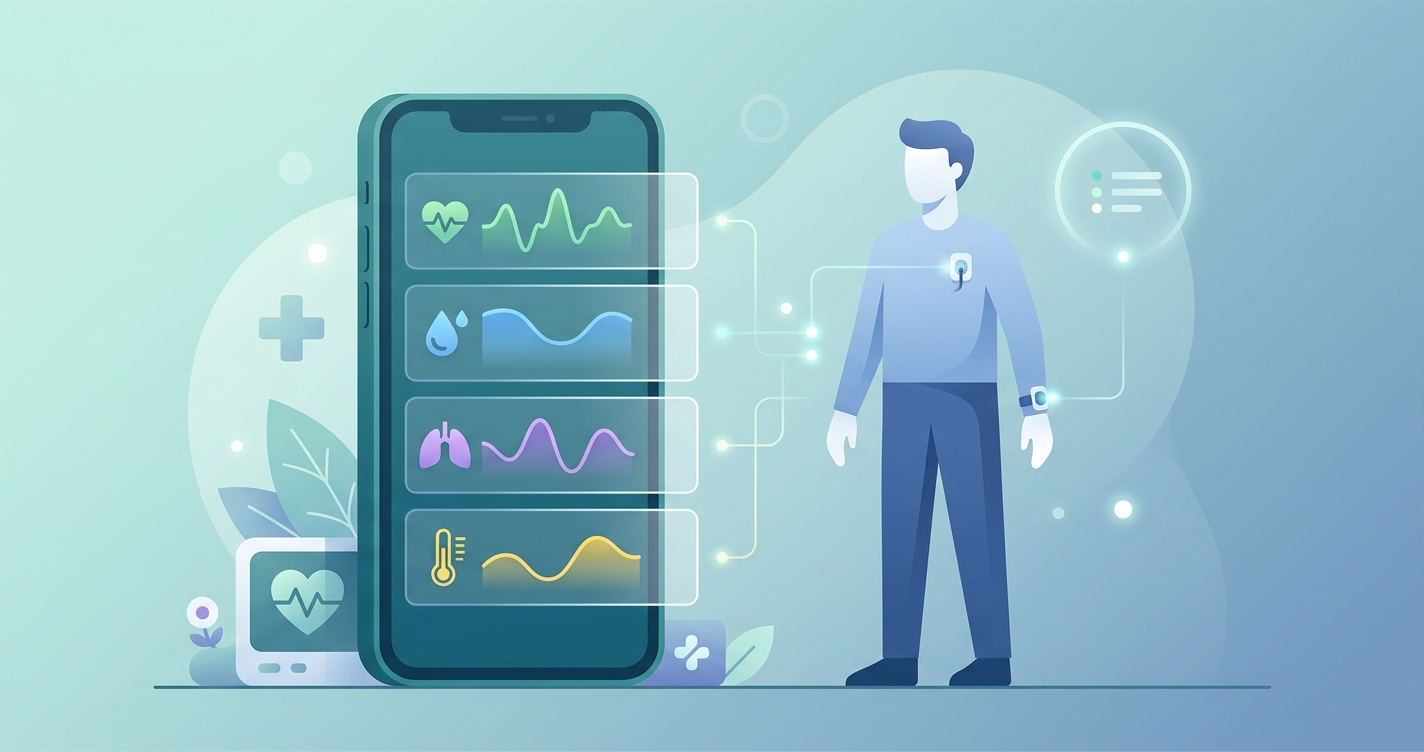
Managing chronic care populations at scale forces clinical teams to confront a harsh operational truth: tracking patient health outside the clinic is rarely limited by clinical expertise, but rather by supply chain logistics. When value-based care organizations attempt to monitor high-risk patients across wide geographic areas, the standard approach involves mailing out physical hardware. This strategy quickly degrades into a cycle of shipping delays, cellular pairing failures, and lost inventory. To solve this, operational leaders are turning toward remote patient monitoring without devices, a methodology that uses the hardware patients already own. By utilizing standard smartphone cameras to measure vital signs, care teams can entirely bypass the logistical bottlenecks of traditional hardware deployment and focus their resources back on direct patient care.
"The economic viability of remote patient monitoring programs frequently degrades not due to clinical failure, but due to the sheer logistical burden of device deployment, retrieval, and technical troubleshooting."
- Jason Glickman, Remote Patient Monitoring Logistics Analysis, 2023
The shift to remote patient monitoring without devices
Value-based care organizations operate on margins that cannot absorb wasted operational effort. Every traditional physical device shipped to a patient represents a distinct point of friction. The financial math of traditional hardware deployment is unforgiving. A standard program might spend hundreds of dollars per patient on the initial hardware kit, which typically includes a cellular hub, a blood pressure cuff, and a digital scale. If the patient drops out of the program after two months - a common occurrence due to device fatigue - the care team is left with used hardware that must be retrieved, sanitized, recalibrated, and redeployed. The logistics of retrieval alone often cost more than the depreciated value of the hardware itself. Consequently, many organizations simply write off unreturned devices as a total loss, crippling the program's return on investment.
Furthermore, clinical staff are frequently forced to abandon their primary caregiving roles to act as technical support agents. A registered nurse should not be spending thirty minutes walking an elderly patient through a complicated cellular pairing process or diagnosing battery issues over the phone.
The alternative is software-based measurement, specifically remote photoplethysmography (rPPG). This technology uses the standard front-facing camera on a smartphone to detect micro-variations in light reflecting off the patient's skin. With every heartbeat, the volume of blood in the microvascular tissue changes, altering the skin's light absorption properties. By capturing these optical changes, advanced algorithms can calculate heart rate, respiratory rate, and blood pressure trends. This means a care manager can instantly activate a patient's monitoring protocol by sending a secure link to their phone, entirely removing the physical supply chain from the equation.
Evaluating hardware vs. software monitoring
| Logistical Component | Traditional Hardware RPM | Contactless Monitoring |
|---|---|---|
| Deployment Strategy | Requires shipping, handling, and tracking numbers | Instant access via existing smartphone application |
| Capital Costs | High upfront expenditure for physical units | Zero hardware purchasing requirements |
| Maintenance | Frequent battery replacements and physical repairs | Managed automatically via remote software updates |
| Patient Friction | Demands learning new interfaces for multiple devices | Utilizes a familiar device the patient already uses |
| Inventory Retrieval | Costly retrieval and sanitation for unreturned units | No physical inventory to track or retrieve |
The operational advantages of eliminating hardware logistics are immediately measurable for chronic care management teams:
- Eliminates inventory shrinkage from lost or unreturned pulse oximeters and blood pressure cuffs.
- Bypasses supply chain delays that prevent high-risk patients from starting their monitoring protocols immediately after hospital discharge.
- Removes the operational overhead of maintaining a technical support desk dedicated to connectivity troubleshooting.
- Reduces device fatigue for multimorbid patients who would otherwise have to juggle several separate pieces of hardware every morning.
Clinical applications for high-risk populations
Heart failure and fluid overload
Managing heart failure requires consistent, daily observation to catch early signs of decompensation. While weight tracking remains a standard metric, resting respiratory rate is an equally critical leading indicator of fluid accumulating in the lungs. Traditional wearable bands often fail because patients simply forget to charge them or find them uncomfortable to wear continuously. Camera-based monitoring allows care teams to capture an accurate resting respiratory rate during a routine daily check-in on the patient's phone, providing early warning signs of fluid overload before an emergency department visit becomes necessary.
Hypertension and cardiovascular health
Hypertension is one of the most common comorbidities in Medicare populations, but traditional cuff-based monitoring suffers from high abandonment rates. Patients often find daily cuff inflation physically uncomfortable or simply inconvenient, leading to sparse data collection. Software-based blood pressure trending offers a lower-friction alternative for daily spot checks. While optical measurement does not replace a clinical cuff diagnostic, it provides longitudinal trending data that helps care managers understand if a patient's medication regimen is maintaining their blood pressure within an acceptable range between formal clinical visits.
Chronic obstructive pulmonary disease (copd)
For patients with COPD, subtle changes in resting heart rate and respiratory effort often signal an impending exacerbation. Asking a patient to manually count their own breaths is notoriously inaccurate, as the conscious effort of counting naturally alters the breathing pattern. Contactless monitoring solves this problem by passively measuring chest wall movement and optical blood flow changes while the patient simply looks at their mobile device. This generates highly objective respiratory data for pulmonary care teams without requiring any additional effort from the patient.
Current research and evidence
The transition from physical devices to optical software is supported by a growing body of academic and corporate research validating the accuracy of rPPG technology.
In 2026, researchers from Google Research, including Ming-Zer Poh and Eric S. Teasley, published findings on passive heart rate monitoring using smartphone cameras. Their methodology evaluated the technology across diverse user demographics. The system achieved a mean absolute percentage error (MAPE) of less than 10 percent across all evaluated skin tones. This research addresses historical concerns regarding the equity and accuracy of optical sensors on darker skin, proving that software-based vitals can be deployed safely across diverse patient panels.
Similarly, a 2023 study published via medRxiv examining the WellFie application reported exceptional predictive accuracy in controlled settings. The researchers documented accuracy rates of 97.34 percent for heart rate and 93.94 percent for systolic blood pressure in normotensive adults. These metrics confirm that optical capture is highly capable of generating clinically relevant trending data for remote teams.
However, clinical leaders must account for environmental variables when deploying software-based tools. Research conducted by Bhargav Acharya, William Saakyan, Dr. Barbara Hammer, and Hanna Drimalla at Bielefeld University investigated rPPG performance in uncontrolled real-world environments. Their findings demonstrated that while baseline accuracy is strong, external factors such as poor ambient lighting or significant physical movement during the reading can cause sharp drops in reliability. This indicates that successful deviceless monitoring programs must incorporate intelligent user interfaces that guide patients into optimal lighting conditions before capturing data.
The future of deviceless monitoring
The next phase of chronic care technology will focus on passive integration and deeper analytical capabilities. As optical algorithms become more sophisticated, the requirement for a patient to actively initiate a reading will diminish. Future systems are expected to capture vital sign trends passively while a patient uses their device for other health-related tasks, such as reading care instructions, scheduling appointments, or conducting a telehealth video visit.
This convergence of telehealth and diagnostic monitoring will allow value-based care organizations to gather continuous health data with zero additional effort required from the patient, permanently altering the economics of population health management. The interoperability of these systems with major Electronic Health Records (EHRs) will also ensure that deviceless data flows seamlessly into the clinical workflow, eliminating data silos and reducing the documentation burden on nursing staff.
Frequently asked questions
Does contactless monitoring require patients to purchase a specific type of phone?
No. Modern rPPG algorithms are optimized to function on standard iOS and Android smartphones manufactured within the last five to seven years. The technology relies on the existing front-facing camera and processing power already present in most consumer devices.
How do care teams handle patients who do not own a smartphone?
While smartphone adoption is exceptionally high even among Medicare beneficiaries, programs can reserve their limited budget for physical hardware specifically for the small percentage of patients who lack smart device access, rather than buying devices for the entire population.
Can optical technology measure blood pressure without a cuff?
Advanced optical applications measure changes in pulsatile blood flow to estimate blood pressure trends. Clinical workflows typically use these optical readings for daily longitudinal trending between formal, cuff-based clinical assessments, rather than as a replacement for initial clinical diagnostics.
What happens if the lighting is poor in the patient's home?
Clinical-grade deviceless applications include real-time environmental feedback. If the ambient lighting is insufficient for an accurate reading, the software will prevent the scan from initiating and prompt the patient to move to a better-lit area or stabilize their device.
For value-based care organizations looking to scale their monitoring programs without the operational burden of mailing and maintaining hardware, Circadify offers software-based solutions built for seamless workflow integration. Learn more about how deviceless technology can support your high-risk populations by exploring our CCM program info.