How to Cut COPD Hospital Visits With Home Monitoring
Learn how daily respiratory monitoring helps ACOs and chronic care programs reduce COPD exacerbations and cut readmission rates through early intervention.
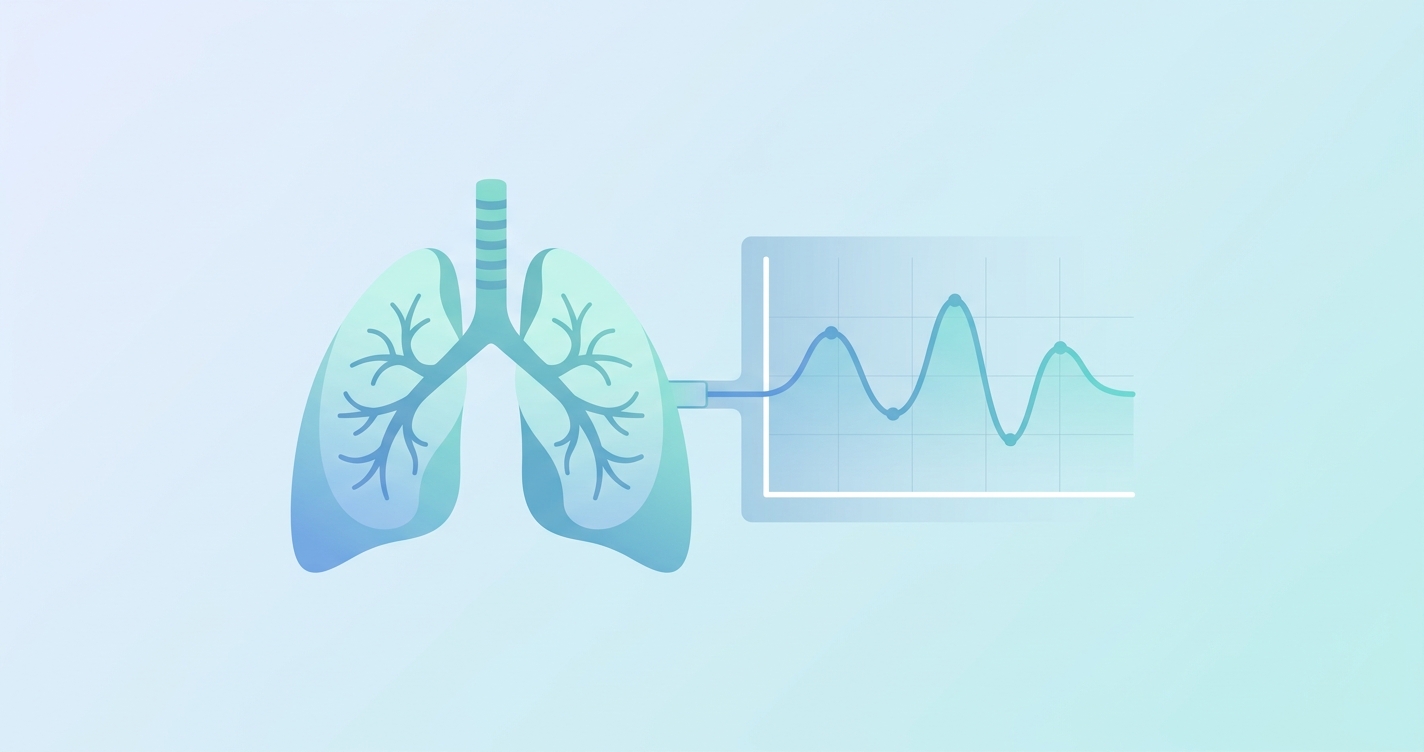
Chronic obstructive pulmonary disease drives an outsized share of total medical expenditures in value-based care. For accountable care organizations and chronic care management companies, managing a respiratory population typically means absorbing the financial and clinical cost of severe, unpredictable exacerbations. Traditional care models wait for a patient to report shortness of breath, by which point emergency intervention is almost guaranteed. Implementing COPD home monitoring changes this operational reality. Continuous tracking of daily breathing and oxygen trends allows clinical teams to spot the early, quiet indicators of respiratory failure. By identifying these physiological shifts days in advance, care providers can move the clinical response out of the emergency department and back into the preventative ambulatory setting.
"Remote interventions dramatically alter the utilization curve. A 2022 study evaluating at-home respiratory programs found that 90-day hospital readmission rates dropped from 43.5 percent to just 13.1 percent when proactive monitoring protocols were implemented." , Rupal Mansukhani, PharmD, Ernest Mario School of Pharmacy, Rutgers University (2022)
The economics of COPD home monitoring
The financial burden of airway disease on the United States healthcare system is massive, driven predominantly by acute exacerbations that require emergency room visits and intensive inpatient admissions. For a value-based care organization, a single severe exacerbation can cost upwards of $20,000, rapidly depleting the shared savings generated by the rest of the managed population. COPD home monitoring introduces a structural shift in how these expenditures are managed. Instead of waiting for a patient to experience severe distress, clinical teams track physiological data continuously and intervene when the cost of care is lowest.
Because an exacerbation is an inflammatory event that builds over several days, the patient's body signals physical distress long before the patient subjectively feels the need to call an ambulance. Resting respiratory rates will slowly climb. Oxygen saturation will experience minor, sustained dips. Heart rates will elevate as the cardiovascular system works harder to compensate for impaired gas exchange. When population health platforms capture this data automatically, care managers can deploy highly effective, low-cost interventions.
A short course of oral corticosteroids, a minor adjustment to bronchodilator therapy, or a simple telehealth visit costs a fraction of an inpatient hospital stay. The economics of this model are straightforward: shifting the intervention upstream protects the capitated budget, preserves the patient's lung function, and significantly reduces the logistical strain on the local health system.
Reactive versus proactive care workflows
| Workflow Element | Traditional Care Model | Active Home Monitoring |
|---|---|---|
| Intervention Trigger | Severe patient-reported dyspnea | Daily deviations in vital signs |
| Site of Care | Emergency department or hospital ward | Ambulatory clinic or patient home |
| Cost Profile | High acuity, high cost inpatient care | Low acuity, low cost preventative care |
| Data Collection | Quarterly or bi-annual in-person visits | Continuous ambient daily collection |
| Clinical Visibility | Blind spots between formal appointments | High-resolution physiological trends |
To achieve these financial and clinical results, remote programs must track specific data points rigorously to build a complete picture of respiratory health:
- Increases in resting breathing rate, which often serve as the earliest indicator of respiratory compromise and impending failure.
- Gradual declines in peripheral oxygen saturation that persist across multiple days, indicating worsening gas exchange.
- Elevated resting heart rates resulting from the body attempting to maintain systemic oxygen delivery to vital organs.
- Changes in sleep quality or nocturnal breathing patterns that signal worsening nighttime airway obstruction.
- Medication adherence records correlated against physiological changes to verify if the current treatment plan is effective.
Industry Applications
Value-based care and accountable care organizations
Accountable Care Organizations face strict mandates to improve quality metrics while simultaneously reducing total medical expenditures. Chronic respiratory failure is a prime target for these organizations due to its high historical costs. By analyzing Medicare Fee-for-Service data, researchers at the Mount Sinai ACO in 2024 demonstrated that remote patient tracking programs yielded a 44.7 percent decrease in inpatient admissions. Furthermore, the 30-day hospital readmission rate dropped by 36.0 percent. This massive reduction in utilization translates directly to immediate financial viability for value-based contracts, generating over $90 in per-member per-month savings simply by avoiding the hospital setting.
Chronic care management operations
Companies operating external Chronic Care Management programs use remote data to scale their clinical workforce efficiently. Managing thousands of patients requires intelligent, data-driven triage. Instead of making random monthly phone calls to check on patients, nurses use software dashboards populated by daily vital signs to call only the patients whose data indicates a declining baseline. This exception-based care model maximizes the efficiency of the clinical staff. However, the success of this model relies entirely on the patient's willingness to collect data. Traditional finger-clip oximeters often suffer from high abandonment rates, pushing the industry toward frictionless data collection methods that require zero effort from the user.
Post-acute and transitional care
The 30 days immediately following a hospital discharge represent the highest risk period for a patient with severe airway disease. Post-acute care teams use daily tracking to ensure patients safely transition back to their home environment without bouncing back to the emergency room. Rapid identification of hypoxia allows home health nurses to intervene directly at the bedside, stabilizing the patient with targeted therapies before full respiratory failure occurs.
Current research and evidence
The clinical efficacy of remote respiratory tracking is strongly supported by recent academic literature and large-scale demographic studies. A comprehensive 2022 study authored by Rupal Mansukhani, PharmD, from the Ernest Mario School of Pharmacy at Rutgers University, evaluated the exact impact of an at-home respiratory intervention program. The researchers found that intensive remote tracking paired with targeted interventions drastically reduced hospital reliance for complex patients. In the studied cohort, the 30-day all-cause readmission rate plummeted from a pre-intervention baseline of 22.3 percent down to just 12.2 percent.
The long-term data extracted from this clinical study is even more compelling for chronic care operators looking at yearly budgets. At the 90-day mark, readmission rates for the monitored group remained extraordinarily low at 13.1 percent, compared to a staggering 43.5 percent in the unmonitored historical group. This confirms that the benefits of daily tracking do not merely delay an inevitable hospitalization; they fundamentally stabilize the patient's chronic condition over the long term.
Furthermore, the 2024 retrospective analysis of the Mount Sinai ACO Medicare population proves that these clinical improvements directly correlate with massive systemic cost savings. The Mount Sinai researchers noted that remote monitoring participants incurred 26 percent lower annual medical costs compared to unmonitored peers, solidifying the financial argument for ubiquitous tracking technology.
The future of COPD home monitoring
The next evolution of chronic respiratory management relies entirely on removing the operational friction of data collection. Wearable devices, while clinically accurate in a controlled setting, introduce heavy behavioral barriers in the home. Elderly patients dealing with multimorbidity often experience severe device fatigue, forgetting to charge equipment, losing small sensors, or simply refusing to wear restrictive monitors that irritate their skin. The future of the industry points firmly toward ambient, contactless data collection.
Technologies that extract vital signs without requiring active patient participation will quickly become the standard infrastructure for value-based care. By utilizing advanced optical sensors or ambient tracking, care teams will achieve near-perfect compliance rates invisibly. When data collection becomes entirely passive, predictive algorithms will finally have the uninterrupted, longitudinal datasets required to forecast exacerbations with high accuracy. This shift will allow the healthcare system to manage chronic illness silently in the background of a patient's life, intervening only when absolutely necessary and eliminating the burden on the patient.
Frequently asked questions
What is COPD home monitoring? It is the application of digital health technology to track the daily physiological status of patients with chronic airway disease in their own homes. Clinical teams monitor data points like respiratory rate, heart rate, and oxygen levels to manage the condition proactively rather than waiting for scheduled clinic visits.
How does tracking vital signs prevent hospital readmissions? An exacerbation typically develops over a period of days, causing subtle changes in a patient's resting vitals before severe shortness of breath sets in. By detecting these early deviations automatically, doctors can prescribe steroids or adjust inhalers immediately, resolving the flare-up before it escalates to an emergency room visit.
Why do Accountable Care Organizations invest in remote tracking programs? Accountable Care Organizations take on direct financial risk for the total cost of a patient's care. Preventing a single intensive care admission for respiratory failure saves tens of thousands of dollars. The operational cost of deploying a remote tracking program is vastly outweighed by the savings generated from avoided hospitalizations.
What are the main challenges with traditional monitoring devices? The primary challenge is patient adherence and device fatigue. Traditional equipment like wearable trackers or daily pulse oximeters require the patient to remember to use them, charge them, and sync them to a mobile device. Device fatigue often leads to massive gaps in data, blinding the care team to impending health issues and neutralizing the value of the program.
For organizations operating in value-based arrangements, reducing respiratory admissions is a critical operational mandate. The main hurdle is no longer the clinical logic, but the logistical challenge of capturing reliable data without frustrating the patient. Circadify is addressing this space by developing contactless technology that automatically records daily vitals without wearables, maximizing patient adherence. To discover how invisible monitoring infrastructure can transform your clinical workflows and reduce exacerbation rates, explore our solutions for chronic care management.