Diabetes Remote Monitoring vs CGM: Which Fits Your Program?
Compare continuous glucose monitors against phone-based vitals monitoring on cost, adherence, and population scale for diabetes programs.
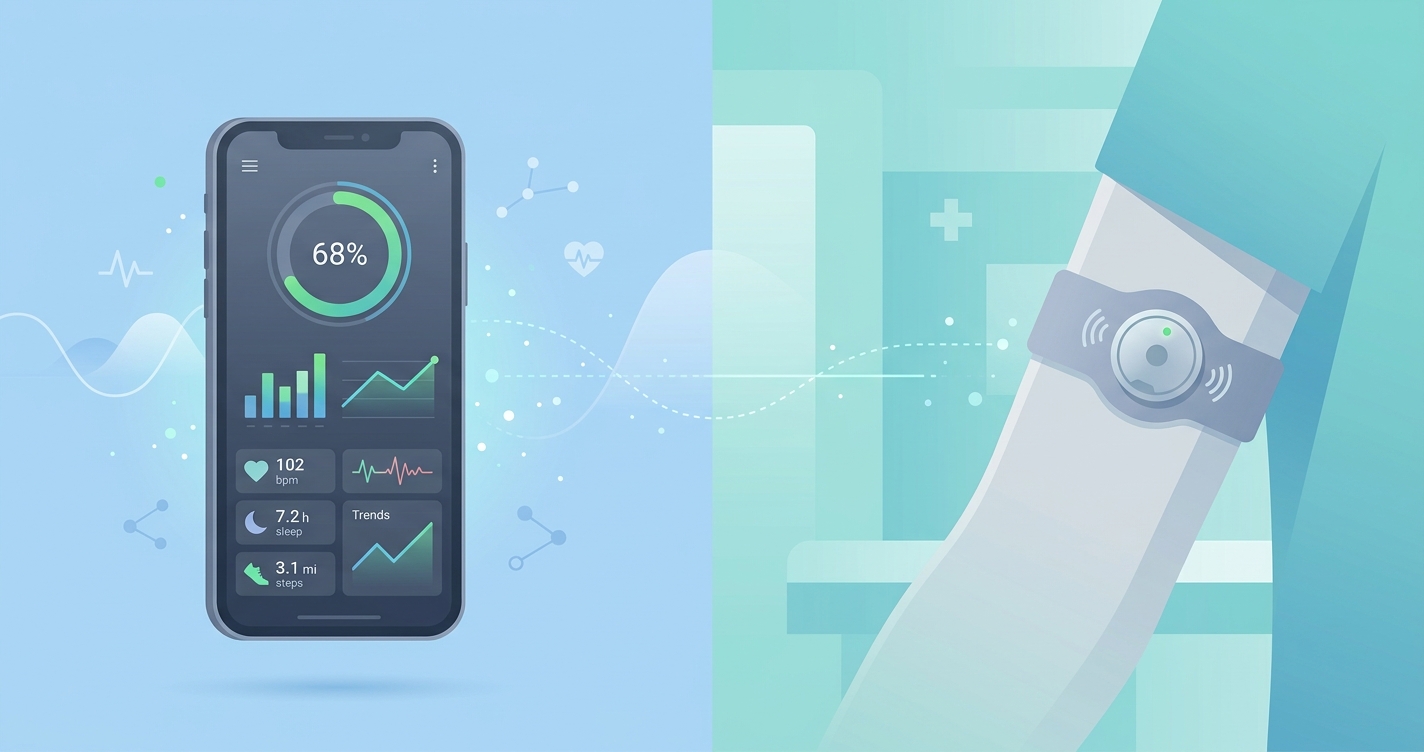
For value-based care organizations and chronic care management companies, tracking glycemic health across a large patient population is an ongoing operational challenge. Clinical leaders are constantly evaluating the most effective ways to capture daily patient data without driving up overhead costs or overwhelming patients with hardware. As accountable care organizations expand their panels, the debate of diabetes remote monitoring vs CGM has become a central focus. Continuous glucose monitors provide highly granular clinical data, but their supply chain logistics, high costs, and low adoption rates present significant barriers for population-wide deployment. Meanwhile, software-driven diabetes remote monitoring platforms, particularly those using contactless vital sign collection, offer an alternative path to scale. Understanding which approach fits a specific chronic care program requires analyzing unit economics, patient adherence behaviors, and the operational reality of managing multimorbid patients at home.
"Despite the clinical consensus that continuous glucose monitors can reduce acute care utilization by 23 percent over a single year, approximately 80 percent of eligible insulin-dependent patients still do not use the technology, revealing a massive adoption gap in population health." - 2023 Retrospective Claims Analysis by CCS Medical and Generativity Health Economics.
The economics of diabetes remote monitoring vs CGM
Evaluating diabetes remote monitoring vs CGM starts with the basic arithmetic of population health management. The traditional model of continuous glucose monitoring requires shipping physical hardware to the patient, replacing sensors every ten to fourteen days, and managing complex durable medical equipment billing cycles. For a specialized endocrinology practice, this hardware investment is justified by the need to tightly titrate insulin doses. However, for a chronic care management company overseeing thousands of Medicare beneficiaries with multiple chronic conditions, outfitting every patient with a continuous glucose monitor is mathematically unviable.
When value-based care organizations calculate the total cost of ownership for device-based programs, they must account for lost sensors, supply chain delays, and the administrative burden of onboarding elderly patients onto wearable technology. Software-based diabetes home monitoring eliminates the physical supply chain. By turning the patient's existing smartphone into a clinical data collection tool, programs avoid the upfront hardware costs and the recurring expense of disposable sensors. This software-only approach allows clinical teams to deploy monitoring instantly to a newly attributed patient panel, shifting the budget from device procurement to direct clinical interventions.
Patient adherence and wearable fatigue
The most sophisticated clinical hardware provides zero value if the patient refuses to wear it. Wearable fatigue is a documented phenomenon in chronic disease management, particularly among elderly populations managing multimorbidity. Patients asked to wear patches, charge devices, and pair bluetooth sensors often abandon the protocol within the first ninety days.
In contrast, fingerstick-free tracking via contactless smartphone monitoring integrates directly into habits the patient already has. Asking a patient to look at their phone camera for one minute daily requires significantly less friction than applying a medical adhesive to their abdomen or arm.
Key adherence factors include:
- Device comfort: Wearables cause skin irritation and physical discomfort for a subset of patients, leading to high abandonment rates.
- Technical friction: Bluetooth pairing issues and hardware malfunctions account for the majority of technical support calls in device-based programs.
- Stigma: Visible medical devices can cause psychological resistance, whereas a smartphone app remains entirely private.
- Routine integration: A daily contactless check-in creates a structured, active engagement moment between the patient and the care team, rather than the passive and often ignored data stream of a wearable.
Comparing the operational models
To determine which approach aligns with specific clinical goals, organizations must weigh the practical differences in deployment and data utility.
| Feature | Continuous Glucose Monitors (CGM) | Contactless Diabetes Remote Monitoring |
|---|---|---|
| Primary Clinical Use Case | High-risk insulin titration and type 1 diabetes management | Broad type 2 diabetes management and multimorbidity tracking |
| Hardware Logistics | High friction: requires shipping, physical inventory, and sensor replacements | Zero friction: utilizes the patient's existing smartphone camera |
| Cost Structure | High recurring costs for disposable sensors and durable medical equipment | Flat software licensing model with high scalability |
| Patient Experience | Requires wearing an adhesive patch and managing physical devices | Brief daily scan using a phone camera without fingersticks |
| Adherence Drop-off | Susceptible to wearable fatigue and skin irritation abandonment | Sustained through simple, habit-based daily interactions |
Industry applications in value-based care
Scaling a chronic disease program requires matching the right technology to the appropriate risk tier of the population. Organizations that succeed in value-based contracting do not apply the most expensive intervention to every patient; they stratify their approach.
Accountable care organizations (acos)
ACOs are measured on their ability to prevent hospital readmissions and manage the total cost of care. For these entities, deploying continuous glucose monitors across an entire type 2 diabetes population would destroy shared savings margins. Instead, ACOs use continuous glucose monitor alternatives like software-based vital sign tracking for the broad base of their rising-risk population. This provides early warning signals for cardiovascular and glycemic deterioration without the hardware expenditure.
Chronic care management companies
Firms that provide outsourced chronic care management services rely on scalable operational models. Their margin depends on efficient clinical workflows and high patient retention. Software-based diabetes care management platforms allow these companies to onboard thousands of patients concurrently. Care coordinators can review daily vital signs, spot dangerous trends, and initiate billing-eligible interactions without waiting for a hardware shipment to arrive at the patient's home.
Population health analytics
Managing population health means looking beyond a single metric. Patients with diabetes rarely suffer from just one condition; they frequently manage hypertension, heart failure, and respiratory issues. A continuous glucose monitor only tracks glucose. In contrast, advanced remote monitoring platforms capture heart rate, respiratory rate, and blood pressure indicators, giving population health teams a holistic view of the patient's cardiovascular and metabolic status.
Current research and evidence
The clinical validity of non-invasive, software-driven monitoring has accelerated rapidly, backed by peer-reviewed research from major academic institutions. Traditional continuous glucose monitoring has decades of literature supporting its efficacy for insulin dosing, but recent studies highlight the severe limitations in its adoption scale.
A 2023 study analyzing claims data, led by researchers at CCS Medical and Generativity Health Economics, found that continuous glucose monitoring reduces total healthcare costs by nearly 20 percent for compliant users. However, the same researchers noted that approximately 80 percent of eligible patients fail to adopt the technology. This massive gap in population coverage has driven researchers to develop more accessible tracking methods.
The application of photoplethysmography (PPG) via smartphone cameras has emerged as a scientifically validated alternative for population screening and tracking. In 2020, Dr. Geoffrey Tison and Dr. Robert Avram at the University of California, San Francisco (UCSF) published research demonstrating that smartphone-based PPG signals can function as a highly accurate digital biomarker for diabetes. By capturing the subtle vascular changes associated with the disease using only a smartphone camera and flashlight, their deep neural network algorithm correctly identified diabetes with up to 82 percent accuracy. This research proves that clinically meaningful metabolic data can be extracted entirely through non-invasive optical sensors, bypassing the need for physical blood analysis or implanted hardware.
The future of diabetes care management
The future of managing chronic conditions lies in unbundling the clinical insight from the medical device. As artificial intelligence and computer vision models become more sophisticated, the necessity of breaking the skin or wearing a physical sensor will be limited to the absolute highest-risk patients.
For the vast majority of the population living with type 2 diabetes, the future relies on ambient and contactless data collection. Programs will use smartphones to track not just vascular changes, but systemic health indicators that predict a glycemic event before it requires emergency intervention. Value-based care organizations are already transitioning their budgets away from hardware procurement and toward software licenses that offer instant deployment. This shift will democratize access to daily monitoring, reaching rural and underserved populations who historically fall through the cracks of durable medical equipment supply chains.
Frequently asked questions
What are the main limitations of using CGMs for large patient populations?
The primary limitations are cost, logistics, and adherence. Procuring and shipping physical sensors to thousands of patients is highly expensive and administratively complex. Furthermore, many patients experience wearable fatigue, skin irritation, or technical issues, leading to high abandonment rates and incomplete population data.
How does contactless diabetes remote monitoring actually work?
Contactless monitoring utilizes the patient's existing smartphone camera to capture photoplethysmography (PPG) signals. By analyzing the subtle color changes in the skin with each heartbeat, deep learning algorithms can extract vital signs and digital biomarkers associated with cardiovascular and metabolic health, without any physical hardware.
Can software-based monitoring replace fingersticks entirely?
For highly insulin-dependent patients requiring exact dosing calculations, traditional glucose tracking remains necessary. However, for broad type 2 diabetes management, software-based monitoring serves as an early warning system and a daily engagement tool, significantly reducing the reliance on painful fingersticks and expensive wearables.
Which approach is better for Medicare Chronic Care Management (CCM) billing?
Both approaches can generate the required data for CCM billing, but contactless software solutions are generally more scalable. Software platforms allow for immediate patient onboarding and consistent daily data collection, which streamlines the time tracking and clinical documentation required for successful Medicare reimbursement.
Value-based care organizations need scalable, high-adherence tools to manage multimorbid populations efficiently. Circadify provides a software-only infrastructure that transforms standard smartphones into powerful clinical data collection tools. By eliminating the friction of hardware and wearables, care teams can capture daily vital signs and metabolic indicators across their entire patient panel. To see how our platform integrates into your clinical workflows and drives sustained patient engagement, explore our solutions at circadify.com/solutions/chronic-care-management.