What daily signs indicate my chronic illness is worsening, before it's too late?
How subtle daily shifts in vitals signal chronic illness decline early, and why chronic care management technology is moving toward continuous detection.
The most dangerous period in a chronic condition is rarely the moment of crisis. It is the quiet window before it, the days when a body is already drifting toward decompensation while the person living in it still feels mostly fine. By the time breathlessness, swelling, or fatigue become obvious enough to act on, the physiological slide has often been underway for the better part of a week. This gap between measurable change and felt symptom is exactly where chronic care management technology is now focused, because closing it is the difference between a phone call and an ambulance. For chronic care management companies, accountable care organizations, and value-based care groups, the operational question is no longer whether early signals exist. It is whether their programs are positioned to catch them daily.
In 2023, roughly 76.4% of US adults, about 194 million people, reported at least one chronic condition, and chronic disease accounts for an estimated 90% of the nation's annual health spending, which reached $4.9 trillion that year. Source: CDC Behavioral Risk Factor Surveillance System and CMS National Health Expenditure data, 2023.
Why chronic care management technology looks at trends, not thresholds
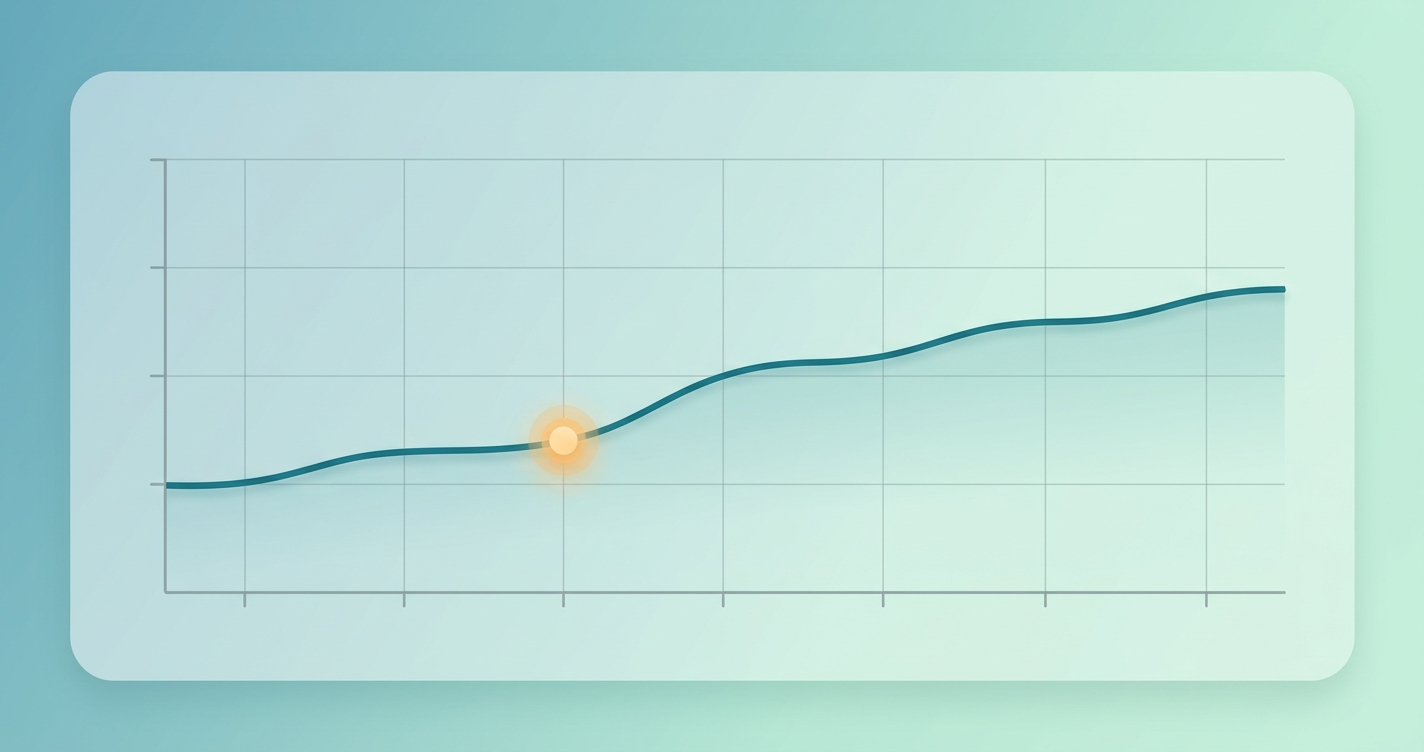
A single reading tells you very little. A patient with heart failure can record a normal blood pressure on Tuesday and still be days into a fluid-retention spiral. What matters is the direction and slope of change across consecutive days. This is the central insight behind modern chronic care management technology: deterioration shows up as a pattern shift before it shows up as a symptom or a threshold breach.
The clearest example is congestion in heart failure. Fluid accumulates gradually, and the lack of early detection of that congestion is one of the primary drivers of readmission. Studies place 30-day heart failure readmission rates around 25%, with broader estimates of 20 to 50% across the year following discharge. Much of that fluid buildup is detectable in weight, resting heart rate, and respiratory rate days before a patient feels the change. The physiology gives you a warning. The monitoring model decides whether anyone hears it.
The same logic applies across conditions. Respiratory rate and oxygen saturation drift ahead of a COPD exacerbation. Resting heart rate elevation and reduced heart rate variability can precede infection or autonomic stress in diabetes. None of these signals is dramatic in isolation. Their value is cumulative, which is why daily cadence matters more than occasional precision.
Here is how the leading early signals compare across the three conditions most chronic care programs manage:
| Daily Signal | Heart Failure | COPD | Diabetes |
|---|---|---|---|
| Resting heart rate (upward trend) | Strong early marker of congestion | Rises with infection or air hunger | Linked to autonomic stress |
| Respiratory rate | Climbs days before decompensation | Primary exacerbation predictor | Rises with metabolic instability |
| Oxygen saturation | Falls late, confirms severity | Early and central indicator | Secondary marker |
| Weight / fluid trend | Highest-value warning sign | Less specific | Tied to fluid and glycemic shifts |
| Heart rate variability | Drops before instability | Drops with exacerbation | Declines with neuropathy |
| Lead time before symptoms | Often 5 to 10 days | 3 to 7 days | Variable, days to weeks |
The pattern across the table is consistent. The most useful signals are not the ones that confirm a crisis. They are the ones that bend early and quietly.
The daily signs that matter most
For care teams translating physiology into a monitoring protocol, a short list of trend-based signals does most of the work:
- A resting heart rate creeping 5 to 10 beats per minute above a patient's personal baseline over several days
- Respiratory rate trending upward, even by 2 to 3 breaths per minute, sustained across consecutive readings
- A steady weight gain, classically more than 2 kg, that signals fluid retention in heart failure
- Falling or increasingly variable oxygen saturation, particularly relevant in COPD
- A declining heart rate variability trend, a general marker of physiological strain
- Reduced activity or slower morning recovery, often the first behavioral tell
The operational catch is that these signals are only useful if they are captured often enough to form a trend, and consistently enough that missing data does not hide the slope. That is where traditional models struggle. Device-based home monitoring depends on patients remembering to weigh themselves, charge a sensor, or wear a cuff. Adherence decays. The signal goes dark precisely when a patient is feeling unwell and least likely to keep up the routine.
Industry applications for value-based care
Chronic care management companies
For CCM programs reimbursed on enrollment and care-coordination time, the value of daily trend data is workflow triage. A care manager covering hundreds of patients cannot call everyone. Trend-based alerts let teams concentrate outreach on the small group actually drifting, turning a flat panel into a ranked one.
Accountable care organizations and value-based care groups
For ACOs carrying financial risk, every avoided admission is direct margin. Heart failure and COPD exacerbations are among the most preventable high-cost events when caught early. Daily contactless check-ins for heart failure, COPD, and diabetes give risk-bearing organizations a continuous read on their highest-cost members without adding device fatigue that erodes participation.
Post-discharge and transitional care
The 30 days after discharge concentrate the highest readmission risk. A monitoring layer that runs daily through that window, and keeps running afterward, converts the riskiest period into the most observed one.
Current research and evidence
The evidence base for trend-based detection continues to strengthen. A 2023 to 2024 feasibility study on continuous vital sign monitoring in chronic heart failure and COPD patients, conducted by researchers at IRBLleida, found that patterns in heart rate, respiratory rate, and oxygen saturation time series carried strong predictive value, with a model reaching an area under the curve of 0.975 for a hospitalization outcome. The signal was not in any single number but in the periodicity and dynamics of the series.
Work on inpatient deterioration reinforces the point. Reviews of vital sign trends on hospital wards, including analyses published in critical care literature, consistently show that the trajectory of vitals detects clinical deterioration earlier than spot checks against fixed thresholds. Early Warning Score systems built on this principle are now standard in hospitals, and the same trend logic is what chronic care management technology brings into the home.
On the heart failure side, the link between fluid retention and readmission is well documented. The literature is clear that undetected congestion drives a large share of the 20 to 50% readmission burden, and that objective early detection of fluid status is associated with fewer events. The clinical case for catching the slow climb is settled. The remaining work is operational: making daily capture frictionless enough that real-world patients actually generate the data.
The future of chronic care management technology
The direction of travel is toward monitoring that disappears into daily life. Three shifts are shaping the next phase:
- A move from device-dependent capture to contactless check-ins that remove charging, cuffs, and wearables from the equation, protecting adherence over months and years.
- A move from single-condition tools to platforms that read multiple signals at once, matching the reality that most high-cost patients carry more than one diagnosis. In 2023, around 51.4% of US adults reported multiple chronic conditions.
- A move from alert volume to alert quality, where the goal is fewer, better-prioritized signals that respect finite care-manager time rather than flooding dashboards.
The endpoint is a chronic care model where the question that opens this article, what daily signs indicate my illness is worsening, is answered continuously and quietly in the background, with a human reaching out before the patient would have thought to call.
Frequently asked questions
How many days of early warning do vitals actually provide before a chronic flare-up? It varies by condition, but research and clinical experience suggest heart failure congestion is often detectable 5 to 10 days before symptoms force action, and COPD exacerbations roughly 3 to 7 days out. The lead time depends entirely on capturing data daily, because a trend cannot form from sporadic readings.
Why are trends more reliable than a single high reading? A single reading reflects a moment that can be skewed by activity, stress, or timing. A trend across consecutive days reveals direction and slope, which is what actually distinguishes normal fluctuation from a developing decline. Threshold-only alerts tend to fire late, once a patient is already in trouble.
Do patients need to wear a device for this kind of monitoring? Not necessarily. The persistent problem with wearable and device-based programs is adherence decay, where patients stop charging or wearing equipment over time. Contactless daily check-ins are designed to remove that friction, which keeps the data stream intact during the long periods when nothing seems wrong.
How does daily monitoring fit a value-based care model financially? Preventable admissions for heart failure and COPD are among the costliest events in a risk-bearing panel. Daily trend monitoring concentrates limited care-manager attention on the few patients actually deteriorating, which is how early-intervention programs translate physiological signal into reduced utilization.
Circadify is building toward this model with daily contactless check-ins for heart failure, COPD, and diabetes, designed to surface the early trend before it becomes an emergency, without adding device fatigue. Chronic care and value-based care teams evaluating early-intervention infrastructure can review program details at circadify.com/solutions/chronic-care-management.