COPD Remote Monitoring: Catch a Flare-Up 3 Days Early
Discover how tracking daily respiratory rate and vital signs through COPD remote monitoring flags exacerbations days before symptoms appear.
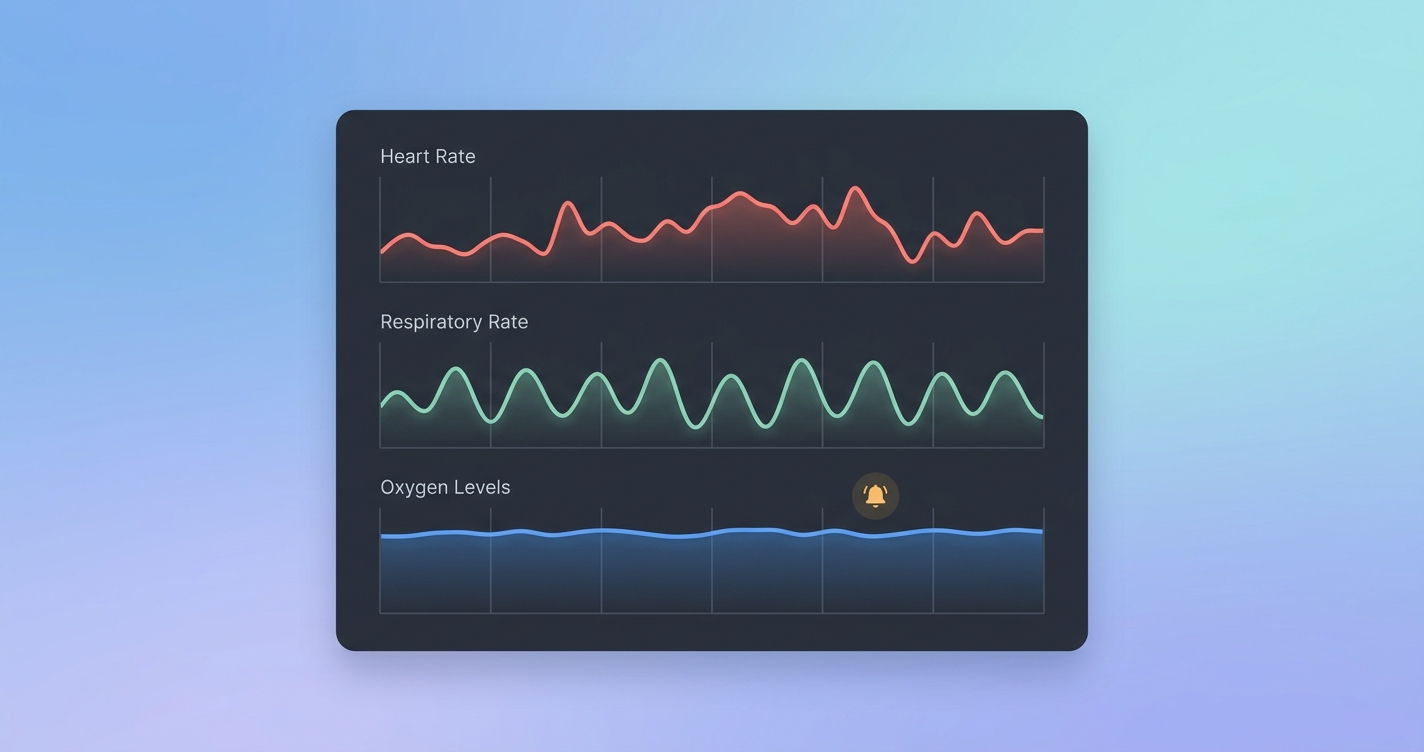
Chronic obstructive pulmonary disease (COPD) accounts for billions of dollars in preventable hospital admissions annually. For chronic care management programs, the central problem is rarely a lack of medical interventions; it is a lack of timing. By the time a patient reports increased shortness of breath, changes in sputum, or extreme fatigue, the physiological cascade of an exacerbation is already well underway. This reactive approach has made COPD remote monitoring a critical focus for accountable care organizations and clinical teams looking to intercept flare-ups before they force a patient into the emergency department. Transitioning from reactive symptom tracking to proactive physiological tracking allows care managers to see an exacerbation developing days before the patient feels sick.
"An increase in mean respiratory rate is consistently observed one to five days prior to hospitalization due to an acute exacerbation, making it a critical leading indicator for early intervention."
Yañez et al., Detection of COPD Exacerbations
The physiological window: why COPD remote monitoring works
The concept of catching a flare-up three days early relies on the biological reality that an acute exacerbation of COPD (AECOPD) does not happen instantly. It is preceded by a multi-day prodromal phase. During this phase, inflammatory markers rise, airway resistance increases, and gas exchange efficiency drops. To compensate for these internal changes, the autonomic nervous system alters baseline physiological functions.
A patient might not feel significantly worse on day minus-three. They might attribute mild fatigue to poor sleep or a shift in the weather. However, their resting respiratory rate may increase by two to three breaths per minute, their resting heart rate may elevate, and their heart rate variability may shift. When care teams rely solely on self-reported symptoms or monthly phone calls, they miss this prodromal window entirely. The patient typically calls the clinic only when their compensatory mechanisms fail, resulting in severe dyspnea that often requires intravenous steroids, mechanical ventilation, or emergency hospitalization.
Deploying a COPD remote monitoring program shifts the timeline of intervention. By tracking vital signs daily, predictive algorithms can establish a baseline for each specific patient. When a deviation occurs, such as a sustained upward trend in respiratory rate over 48 hours, the system flags the patient for review. A care manager can then contact the patient, verify their condition, and coordinate an early prescription for oral corticosteroids or antibiotics. This proactive model shifts the site of care from the hospital back to the home.
Comparing care models for COPD
| Metric | Traditional Symptom Tracking | Physiological COPD Remote Monitoring |
|---|---|---|
| Detection Window | 0 to 24 hours prior to acute crisis | 3 to 5 days prior to acute crisis |
| Primary Data Source | Patient self-reporting and questionnaires | Objective vital signs |
| Patient Burden | High (requires daily active reporting) | Low (passive data collection) |
| Intervention Point | Late (often requires emergency admission) | Early (manageable with oral medications at home) |
| Scalability | Low (relies on manual phone calls) | High (automated triage and dashboard flagging) |
The core physiological metrics that predict a COPD flare-up include:
- Respiratory Rate (RR): Often the earliest and most sensitive indicator. An increase of just 1.5 to 3 breaths per minute from a patient's baseline can signal an impending event long before oxygen levels drop.
- Peripheral Oxygen Saturation (SpO2): A sustained drop in resting oxygen saturation frequently accompanies the inflammatory response and mucus hypersecretion typical of an exacerbation.
- Resting Heart Rate (HR): An elevated resting heart rate indicates increased work of breathing and systemic stress as the body fights an incipient respiratory infection or inflammatory trigger.
- Heart Rate Variability (HRV): Decreased HRV complexity has been linked to physiological instability, demonstrating how the autonomic nervous system struggles to maintain equilibrium prior to an acute exacerbation.
Industry applications for value-based care organizations
Implementing advanced monitoring technologies requires a clear operational use case. For organizations taking on financial risk, the data must translate directly into modified clinical workflows.
Accountable care organizations (acos)
Accountable care organizations bear the financial risk of COPD hospitalizations, which are consistently among the most expensive admission types for Medicare beneficiaries. A single emergency department visit and subsequent inpatient stay for acute respiratory failure can erase the financial margin for an entire patient panel. ACOs utilize continuous vital sign tracking to identify the top three to five percent of patients who are actively deteriorating on any given day. By catching these patients 72 hours early, ACOs can deploy community paramedics, schedule same-day telehealth visits, or adjust home oxygen therapy. This targeted approach drastically reduces total cost of care while improving the quality of life for the patient. It also prevents the subsequent physical deconditioning that often follows a lengthy hospital stay, keeping patients healthier over the long term.
Chronic care management (ccm) providers
Chronic care management providers face a slightly different challenge: maximizing workflow efficiency while meeting Medicare billing requirements. Calling hundreds of patients randomly every month is an inefficient way to deploy limited nursing resources and often fails to prevent acute events. CCM programs integrate daily vital sign data to dynamically drive their daily call lists. Instead of asking stable patients how they feel, care managers reach out specifically to patients whose respiratory rate has climbed steadily over the weekend. This data-driven outreach improves patient engagement, satisfies the clinical time requirements for billing codes, and ensures that highly trained clinical staff spend their time on individuals who actually need medical intervention.
Current research and evidence
The clinical foundation for early exacerbation prediction is well established in peer-reviewed literature. Researchers have repeatedly demonstrated that physiological changes precede subjective symptom reports by several days.
A comprehensive systematic review published by Ahmed M. Al Rajeh and J. Hurst (MDPI, 2016) evaluated the efficacy of monitoring physiological parameters to predict COPD exacerbations. After reviewing sixteen distinct clinical trials covering hundreds of participants, the authors noted that fifteen studies reported positive results in predicting a flare-up through vital sign monitoring. The data clearly showed that tracking subtle variations in respiratory rate and oxygen saturation provided a reliable early warning system, outperforming subjective symptom diaries.
More recently, a 2023 study by M. A. N. Al-Jumaily and colleagues in the Journal of Medical Engineering & Technology focused specifically on the early identification and treatment of COPD exacerbations using remote respiratory monitoring. Their research reinforced that remote respiratory tracking enables care teams to initiate treatment protocols before acute respiratory failure occurs. The study highlighted that continuous physiological data collection creates a clear window for clinical teams to act.
Additional research by Shah et al. and Yañez et al. has consistently highlighted respiratory rate as the most valuable metric for remote observation. In multiple cohorts, researchers observed that the mean respiratory rate increased one to five days prior to hospitalization. This shift occurs as the lungs struggle to maintain adequate gas exchange, forcing the breathing muscles to work harder. Furthermore, studies by Borel and colleagues found that an abnormally high breathing rate maintained for at least two out of five consecutive days significantly increased the statistical risk of an imminent exacerbation. Together, these peer-reviewed findings confirm that the physiological precursors to a COPD crisis are measurable and actionable if the right tools are deployed.
The future of COPD remote monitoring
The primary barrier to scaling chronic disease monitoring has always been patient compliance. Patients with COPD are typically older, multimorbid, and highly susceptible to device fatigue. Asking them to wear a chest strap, charge a smart ring, or manually sync a Bluetooth pulse oximeter every single day leads to massive drop-off rates after the first ninety days.
The future of this space is moving away from wearables entirely. Contactless monitoring technologies, utilizing ambient sensors, radar, and advanced camera-based vital sign extraction, represent the next operational standard for population health. These systems can accurately measure respiratory rate, resting heart rate, and heart rate variability without requiring the patient to touch a device or alter their daily routine. By removing the friction of hardware compliance, value-based care organizations can finally achieve the uninterrupted, longitudinal data sets required to make three-day prediction models a reality for their entire population. This shift from active compliance to passive data collection ensures that care managers always have the data they need to act, precisely when the patient needs them most.
Frequently asked questions
What vital signs best predict a COPD exacerbation?
Respiratory rate is widely considered the strongest early indicator of a COPD exacerbation, followed by resting heart rate, heart rate variability, and peripheral oxygen saturation (SpO2). Changes in breathing mechanics often occur days before a drop in oxygen is detected.
How many days in advance can COPD remote monitoring detect a flare-up?
Clinical studies indicate that physiological changes, particularly increases in respiratory rate, can be detected between one and five days before a patient requires hospitalization for an acute exacerbation.
Why is self-reporting insufficient for COPD management?
Self-reporting relies on subjective perception of symptoms. Many patients do not notice subtle increases in their work of breathing until their compensatory mechanisms fail, which is often too late for simple outpatient interventions.
How does contactless monitoring improve chronic care programs?
Contactless monitoring removes the burden of wearing, charging, and syncing devices. This drastically reduces device fatigue, ensuring that care teams receive uninterrupted, long-term vital sign data for high-risk patients.
For value-based care organizations, catching a COPD exacerbation three days early is the difference between a simple medication adjustment and a costly hospital admission. Circadify is addressing this space by equipping care teams with the contactless tools they need to monitor high-risk populations without relying on wearable devices. Learn more about how to implement these strategies by visiting our chronic care management solutions.