Chronic Care Management Technology: 2026 Vendor Comparison
A side-by-side breakdown of leading chronic care management technology options in 2026. Compare platform features, patient adherence rates, and setup times.
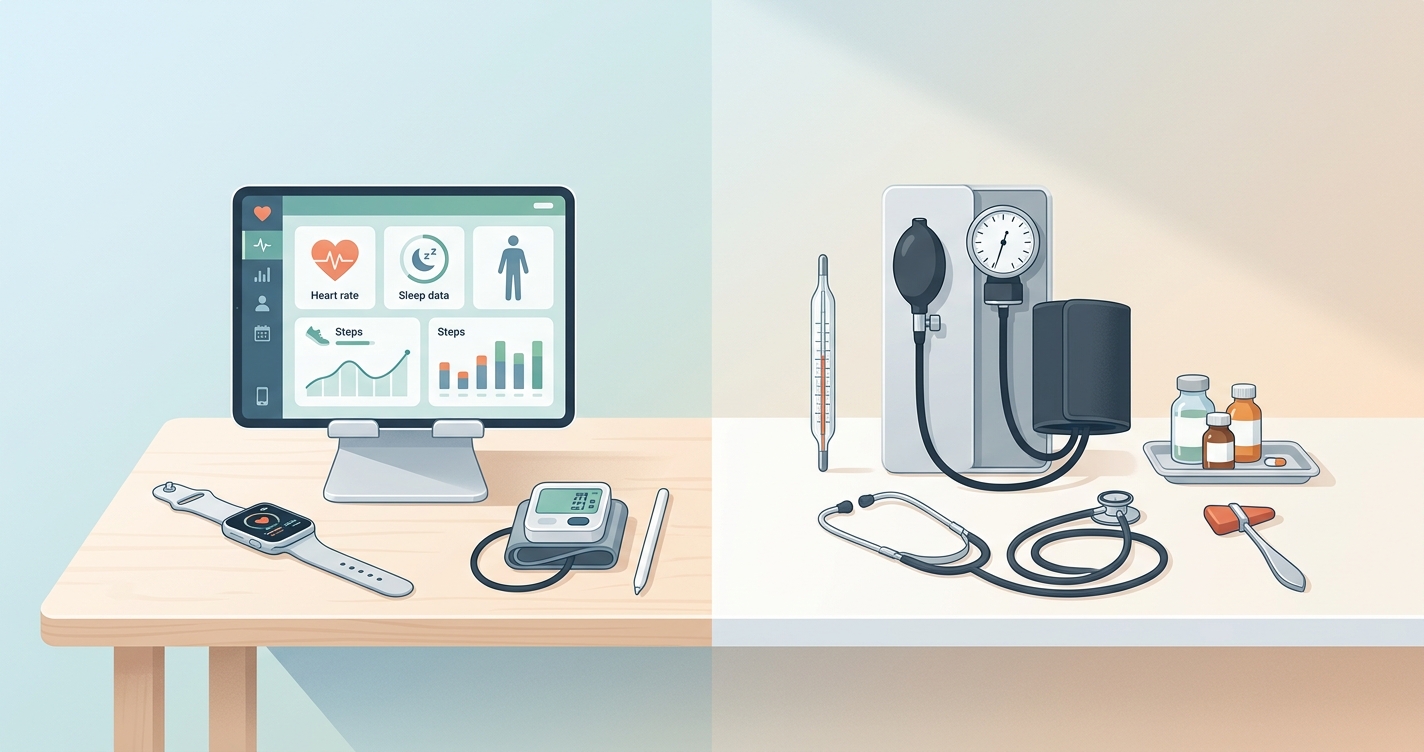
Value-based care organizations entering 2026 face an escalating operational math problem: chronic disease management accounts for the vast majority of medical spend, yet the conventional tools used to track these populations at home routinely fail at the implementation level. A comprehensive chronic care management technology comparison reveals that clinical efficacy is rarely the breaking point for modern monitoring systems. Instead, population health programs collapse due to supply chain friction, device fatigue, and precipitous drop-offs in patient adherence over the first ninety days. For accountable care organizations (ACOs) and chronic care managers, selecting the right infrastructure means looking past basic hardware spec sheets to evaluate how seamlessly a system integrates into the daily lives of elderly, multimorbid patients without requiring active behavioral changes.
"Remote patient monitoring devices contribute to significantly lower patient mortality and re-hospitalization rates, with readmissions decreasing by over 65% in optimized programs, but these outcomes depend entirely on sustained patient engagement rather than just the technology itself.", 2023 Remote Monitoring Clinical Outcomes Report
The shifting requirements for at-home infrastructure
The evaluation criteria for chronic care management technology have fundamentally transformed over the past two years. Previously, value-based care leaders prioritized data volume, assuming that more sensors would naturally lead to better clinical decisions. Today, a chronic care management technology comparison centers on data sustainability and operational efficiency.
The reality is that shipping a Bluetooth blood pressure cuff, a pulse oximeter, and a digital weight scale to a heart failure patient creates an immediate friction point. While initial activation rates might look promising in the first thirty days, the manual effort required from the patient leads to behavioral fatigue. Care managers find themselves spending highly compensated clinical hours acting as IT support desks, troubleshooting pairing issues, charging failures, and Wi-Fi dropouts. Modern systems bypass the patient's technical limitations entirely, operating ambiently or through simple, pre-existing interfaces.
When building a comparative analysis of available systems in 2026, healthcare executives must measure vendor capabilities across three core operational metrics: logistics overhead, multi-condition applicability, and long-term adherence.
Chronic care management technology comparison matrix
| Technology Category | Average Setup Time | 90-Day Adherence Rate | Primary Operational Barrier | Best Fit Use Case |
|---|---|---|---|---|
| Traditional Wearables & Cuffs | 7-14 Days | 45% - 60% | Device pairing, patient tech literacy | Short-term acute recovery monitoring |
| Legacy Telehealth Peripherals | 14-21 Days | 65% - 70% | High supply chain cost, logistics | Complex, scheduled specialist care |
| Contactless & Camera-Based Systems | < 24 Hours | > 85% | Software integration mapping | Multimorbid population health management |
When parsing the differences between legacy vendors and next-generation platforms, clinical operations teams should isolate the following capabilities:
- Hardware independence: The ability to collect vital signs without shipping proprietary devices, thereby eliminating supply chain bottlenecks.
- Frictionless data capture: Methods that do not require patients to manually document readings or remember to charge external batteries.
- Cross-condition tracking: Unified dashboards that monitor overlapping indicators for heart failure, COPD, and diabetes simultaneously.
- Automated stratification: Algorithms that push high-risk patients to the top of a care manager's queue based on deviations from personal baselines.
- Billing integration: Direct mapping of remote physiologic monitoring (RPM) and chronic care management (CCM) time logs to Medicare CPT codes.
Industry applications across high-cost conditions
Heart failure operations
Heart failure remains a dominant driver of readmissions and cost in any Medicare population. Traditional management relies on daily weight checks to catch fluid retention before it results in pulmonary edema. However, weight is a lagging indicator. By the time the scale registers a clinically significant shift, the patient may already be heading toward the emergency department. Next-generation chronic care technologies prioritize early-warning vital signs, such as resting heart rate variability and respiratory rate, which often shift days before fluid accumulation becomes severe. Transitioning from lagging indicators to leading indicators allows care managers to adjust diuretics before an acute event occurs.
COPD and Respiratory Baselines
For chronic obstructive pulmonary disease (COPD), the primary objective is preventing exacerbations that lead to costly inpatient stays. Patients with COPD often habituate to their declining respiratory function, meaning they do not report symptoms until they are in acute distress. Modern monitoring technologies allow care managers to track subtle increases in resting respiratory effort without requiring the patient to actively use a spirometer or wear a continuous pulse oximeter. This passive data collection establishes a highly accurate baseline, making any deviation immediately obvious to the population health team without inducing patient anxiety.
Diabetes and metabolic tracking
Managing diabetes in a value-based care contract requires more than just episodic HbA1c checks. While continuous glucose monitors (CGMs) have altered direct blood sugar tracking, comprehensive metabolic care requires a wider view of the patient's cardiovascular strain. Peripheral neuropathies and vascular complications often manifest in vital sign irregularities. By integrating contactless vital sign tracking alongside standard metabolic data, care teams can monitor the cascading effects of poorly controlled diabetes on the heart and respiratory systems, intervening before a vascular event occurs.
Current research and evidence
The shift away from hardware-heavy models is supported by extensive clinical analysis. According to Mayo Clinic program data published in recent years, traditional remote patient monitoring configurations achieved a 72.5% compliance rate with care plan tasks, which is sufficient to lower readmission rates but requires massive operational overhead in the form of adherence calls (Mayo Clinic, 2023). Research indicates that when traditional device users do not receive active coaching or reminders, data transmission drops precipitously.
In a retrospective cohort study of Medicaid patients utilizing remote monitoring, non-adherent patients showed mean data transmission rates of just 45.9% prior to receiving manual intervention calls from clinical staff. This drop-off points to the structural flaw in systems requiring active patient participation.
Furthermore, prominent researchers in the field emphasize that the value of these systems lies in sustained, low-effort engagement. Dr. Ruchit Shah has published extensively on the benefits of remote monitoring in heart failure management, noting that continuous, early detection of deterioration is critical for reducing hospitalizations (Shah, 2023). Similarly, Dr. Kerry Evans has observed that remote patient monitoring improves outcomes only when it integrates real-time feedback and personalized health insights in a way that aligns with the patient's daily routine, rather than forcing them to adapt to complex clinical hardware (Evans, 2024).
The future of chronic care management technology
Looking beyond 2026, the trajectory of chronic care management technology is moving definitively away from the patient's physical body. The industry is aggressively adopting software-as-a-medical-device (SaMD) models and optical sensor technologies that utilize the smartphones and tablets patients already own.
This transition solves the dual crisis of device fatigue and logistics management. Instead of mailing a box of plastic sensors that will inevitably be abandoned in a drawer, ACOs can provision secure software that captures heart rate, respiratory rate, and blood pressure proxies through a standard device camera. The future of this space prioritizes ambient, contactless data collection that respects the patient's dignity and living space while providing clinical teams with a continuous, uninterrupted stream of physiological intelligence.
By removing the hardware barrier, value-based care organizations can finally scale their monitoring programs across their entire high-risk census, rather than rationing expensive hardware to a small fraction of their sickest patients. This democratization of clinical data collection represents the next major leap in achieving the financial and clinical goals of value-based care.
Frequently asked questions
What is the difference between RPM and CCM technology? Remote Physiologic Monitoring (RPM) specifically refers to the collection and analysis of patient vital signs from outside a clinical setting. Chronic Care Management (CCM) is a broader category of non-face-to-face care coordination for patients with two or more chronic conditions. Modern technologies often combine both, allowing the vital sign data collected via RPM to inform the care coordination billed under CCM.
Why do traditional remote monitoring programs experience high drop-off rates? Traditional programs rely on proprietary hardware, such as Bluetooth cuffs, scales, and finger sensors. Patients, particularly the elderly or multimorbid, experience "device fatigue" from having to remember to charge, pair, and correctly use multiple devices every day. When the technology requires active behavioral changes, adherence inevitably declines over a 90-day period.
How does contactless monitoring capture vital signs? Contactless systems typically utilize remote photoplethysmography (rPPG) and computer vision through the camera of a smartphone or tablet. By analyzing micro-changes in light absorption on the skin and subtle physical movements, the software can extract cardiovascular and respiratory data without the patient needing to wear or hold a specific medical device.
What should an ACO prioritize when selecting a vendor in 2026? Accountable Care Organizations should prioritize logistics-free deployments, high long-term adherence rates, and interoperability. A platform that requires no supply chain management and minimizes patient effort will yield a much higher return on investment and more consistent clinical data than a system reliant on mailing out physical hardware.
For value-based care organizations struggling with device fatigue and supply chain bottlenecks, transitioning to a software-first model is the most effective way to scale population health initiatives. Circadify is addressing this space by providing chronic care management companies with the infrastructure needed to capture daily vital signs without requiring patients to manage proprietary hardware. To see how contactless monitoring can improve your 90-day adherence rates and streamline clinical operations, explore our chronic care management technology solutions today.