CCM Remote Monitoring vs Telehealth: Which Saves More Money?
A cost comparison of CCM remote monitoring versus episodic telehealth on readmissions, outcomes, and total spend for value-based care organizations and ACOs.
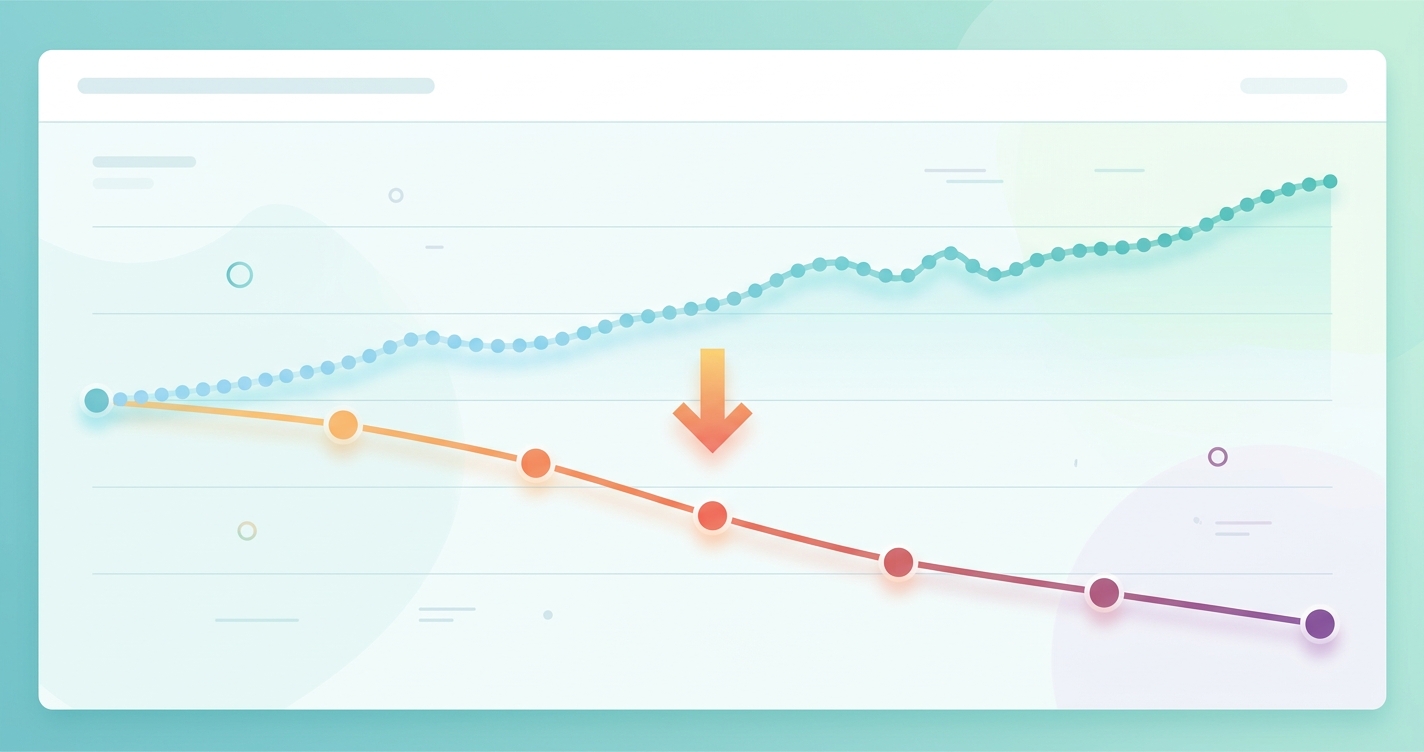
Value-based care leaders evaluating virtual care budgets keep running into the same comparison: should dollars go toward more telehealth visit capacity, or toward continuous between-visit monitoring? The two approaches look similar on a vendor slide, but they behave very differently inside a total-cost-of-care model. CCM remote monitoring generates a daily stream of vitals that surfaces decompensation before it becomes an admission, while telehealth depends on a patient noticing something is wrong and booking a slot. For chronic care management companies and accountable care organizations carrying downside risk, that difference is the entire economic argument.
A meta-analysis of 21 randomized controlled trials found that remote monitoring cut heart failure admissions by 23% and produced estimated savings of up to $1,000 per patient per year, driven almost entirely by avoided hospitalizations.
Ccm remote monitoring vs telehealth: where the money actually moves
The cost of a chronic disease population is concentrated in a small number of high-acuity events: emergency department visits, inpatient admissions, and 30-day readmissions. A single heart failure admission can run well past $15,000, which means the financial value of any virtual care program is measured less by what it charges and more by what it prevents.
Telehealth and CCM remote monitoring attack that spending from opposite directions. Telehealth replaces an in-person encounter with a video encounter. It lowers the unit cost of a visit, saves patients roughly $35 per appointment in transportation, and reduces lost wages, but it is still episodic. A telehealth visit only happens when something is already scheduled or when a patient self-identifies a problem. By the time a heart failure patient feels short of breath enough to call, fluid overload is often days advanced.
CCM remote monitoring inverts that timing. Daily vitals create a trend line, and the trend line is what triggers an intervention. The 2024 study from Finland on heart failure telemonitoring reported significant reductions in both hospitalization costs and the number of hospitalized patients, precisely because clinicians acted on early signals rather than waiting for the next contact. A remote patient care program analyzed in a Medicare cohort published in PMC produced average total savings of $1,302 per patient per year alongside a 27% reduction in hospital admissions across heart failure, hypertension, and diabetes.
Here is how the two models compare on the dimensions that drive a savings calculation.
| Dimension | CCM Remote Monitoring | Episodic Telehealth |
|---|---|---|
| Data frequency | Daily vitals, continuous trend | Point-in-time, per visit |
| Detection timing | Before symptoms escalate | After patient self-reports |
| Primary cost lever | Avoided admissions and readmissions | Lower per-visit cost |
| Readmission impact | 23-50% reductions reported | Limited direct effect |
| Reimbursement model | CCM and RPM recurring codes | Per-encounter billing |
| Patient effort | Passive or low-effort check-ins | Active scheduling required |
| Best fit | Ongoing risk management | Acute or routine consults |
The two are not mutually exclusive. The strongest programs use telehealth as the response channel and remote monitoring as the detection layer. But when a value-based organization has to choose where the marginal dollar produces the most savings, the evidence points toward continuous monitoring.
Why between-visit monitoring carries the savings
The economic case for between-visit monitoring rests on a few structural facts about chronic disease:
- Deterioration is gradual and often silent, so the window for cheap intervention opens long before symptoms appear.
- The most expensive outcomes are unplanned, meaning prevention is far cheaper than treatment.
- Quarterly or even monthly visits leave weeks of blind spots where risk accumulates unobserved.
- Early titration of medication, prompted by a vitals trend, costs a phone call instead of a hospital bed.
Telehealth compresses the cost of contact but does nothing about the blind spots between contacts. That is the core limitation in a risk-bearing arrangement. A program can run 10,000 efficient video visits and still miss the slow fluid accumulation that lands a patient in the hospital on day 18 of a 90-day gap.
Industry Applications
Accountable care organizations
ACOs operating under shared savings or capitation absorb the full cost of avoidable admissions. For these organizations, CCM remote monitoring functions as a financial hedge. The readmission reductions documented in the literature, ranging from 23% in a multi-plan telemonitoring analysis to a 50% cut in 30-day congestive heart failure readmissions at one health system, translate directly into retained shared savings dollars.
Chronic care management companies
Dedicated CCM organizations bill recurring care management and remote monitoring codes, which means continuous monitoring aligns revenue with the activity that also reduces total cost. Telehealth alone produces per-encounter revenue but leaves the high-cost events on the table. Layering daily monitoring onto a CCM panel improves both the care management margin and the quality scores tied to readmission performance.
Multimorbidity and high-risk panels
Patients with overlapping conditions, such as heart failure with diabetes and COPD, generate the most spending and benefit most from continuous signals. A single daily check-in that captures multiple vitals lets care managers prioritize the few patients drifting toward crisis instead of cycling all patients through the same visit cadence.
Current research and evidence
The evidence base for remote monitoring has matured from pilots into population-level analysis. A 2023 retrospective cohort study published in JMIR Cardio examined smartphone-based remote monitoring for heart failure with reduced ejection fraction and found a lower hazard of emergency department attendance and unplanned admissions among monitored patients. The same body of work reported 44% lower odds of 30-day readmission and 38% lower odds of 90-day readmission in telemonitoring enrollees.
On the cost side, the 21-trial meta-analysis cited above estimated up to $1,000 per patient in annual savings, and the Medicare remote patient care analysis in PMC documented $1,302 per patient per year with a 27% admission reduction. Industry estimates put RPM return on investment near $1,390 per patient and between $144,000 and $160,000 per physician annually for Medicare chronic disease panels.
Telehealth research tells a complementary but narrower story. Studies confirm telehealth lowers per-visit cost and improves access, with patient savings around $35 per visit and reduced travel burden. What the telehealth literature does not show is a comparable, independent effect on readmissions, because a periodic visit simply lacks the temporal density to catch early deterioration. The two technologies are measured on different axes: telehealth on access and convenience, remote monitoring on avoided acute events.
It is worth noting the methodological caveats. A scoping review of economic evaluation methods for remote monitoring published in the Journal of Medical Internet Research flagged wide variation in how studies define savings, time horizons, and comparison groups. The direction of the evidence is consistent, but the magnitude varies by condition, population acuity, and program design.
The future of CCM remote monitoring vs telehealth
The trajectory is convergence, not competition. Reimbursement is moving to support both, with recent Medicare changes treating remote monitoring as a recognized component of primary care services and expanding its use in community health settings. The market is projected to keep growing, with tens of millions of US patients expected to use remote monitoring.
Three shifts will shape the next few years:
- Friction reduction. Device fatigue is a known reason monitoring programs lose patients, so contactless and low-effort check-in methods will determine which programs sustain the daily data that produces savings.
- Triage intelligence. As daily data scales, the value moves to systems that flag the handful of patients who need a telehealth visit today, making the two modalities a single workflow.
- Risk-adjusted contracting. As payers tie more revenue to total cost of care, continuous monitoring shifts from a nice-to-have into the mechanism that makes downside risk survivable.
The organizations that win on cost will not pick one tool. They will use remote monitoring to find the problem and telehealth to resolve it, with the monitoring layer carrying most of the measurable savings.
Frequently asked questions
Does CCM remote monitoring really save more than telehealth? On total cost of care, the evidence favors remote monitoring because it prevents the expensive events, with documented savings around $1,000 to $1,300 per patient per year and readmission reductions of 23% or more. Telehealth lowers per-visit cost but has a weaker direct effect on admissions. The two work best together.
Can a value-based organization run both without doubling spend? Yes. Remote monitoring and telehealth occupy different roles, with monitoring as the detection layer and telehealth as the response channel. Recurring CCM and RPM reimbursement codes help offset the monitoring cost, and avoided admissions typically more than cover the program.
Why is between-visit monitoring more effective at cutting readmissions? Chronic deterioration is gradual and often silent. Daily vitals catch the trend days before a patient would notice symptoms and call, which opens a cheap intervention window. Episodic visits leave weeks of blind spots where risk accumulates unobserved.
Which conditions show the strongest cost case? Heart failure shows the most robust readmission and cost reductions in the literature, followed by hypertension, COPD, and diabetes. Patients with multiple overlapping conditions tend to produce the largest savings because they carry the highest baseline spending.
Circadify is building toward this exact model, pairing daily contactless check-ins for heart failure, COPD, and diabetes with the between-visit detection layer that makes savings measurable. Value-based care organizations evaluating where the next dollar produces the most return can walk through a savings model for a CCM program at circadify.com/solutions/chronic-care-management.