7 Signs Your Chronic Care Program Needs Daily Vitals Data
Discover the 7 warning signs your chronic care management program has monitoring gaps, from missed exacerbations to low engagement, and why daily vitals matter.
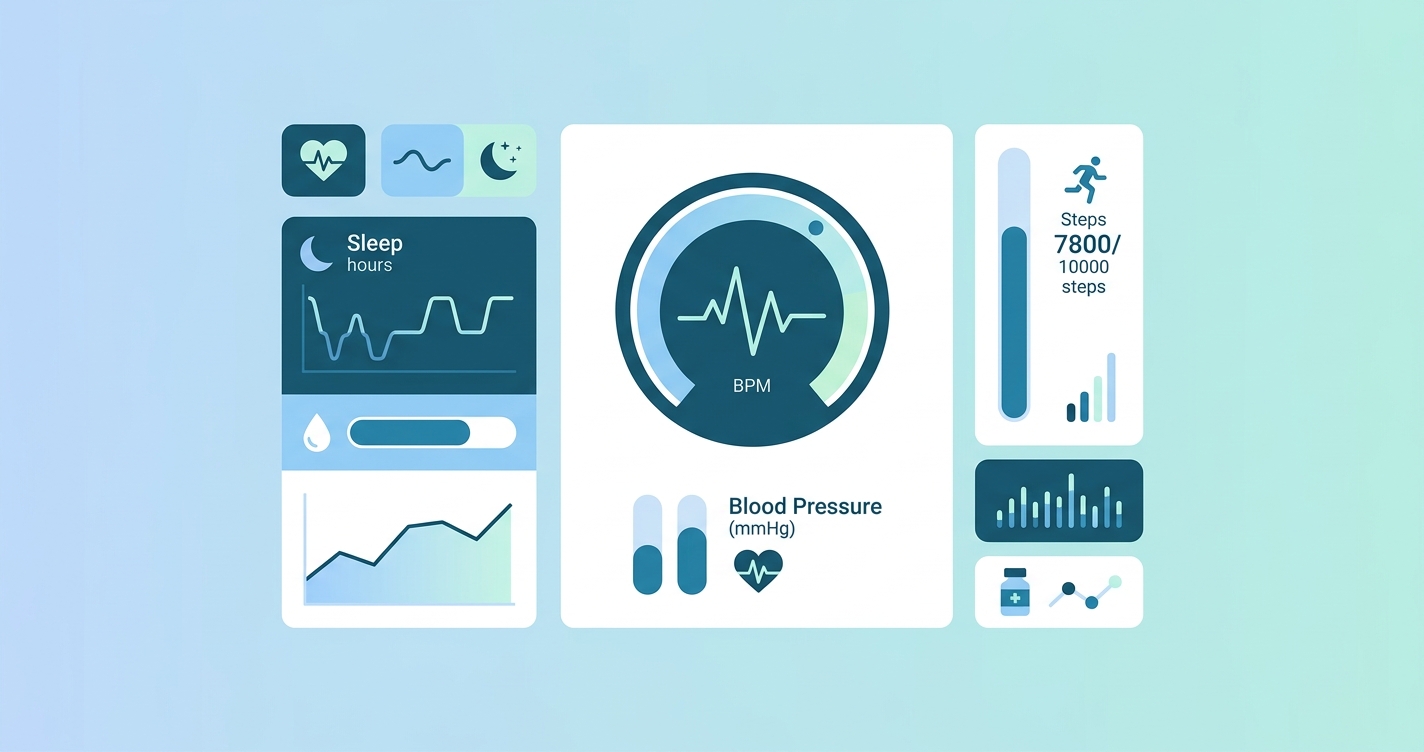
Managing a high-risk patient population requires more than just a monthly phone call or an occasional check-in. In 2023, nearly 1.3 million Medicare beneficiaries received remote services, yet many value-based care organizations still operate with significant blind spots between clinical encounters. A chronic care program daily vitals strategy is no longer just a nice-to-have feature; it is the operational baseline for preventing hospital readmissions and managing total cost of care. Without continuous, frictionless data collection, care managers are left reacting to late-stage symptoms rather than preventing exacerbations before they escalate.
"In evaluating heart failure remote patient monitoring, researchers found that patient adherence to data transmission can drop from 83 percent in the first week to 46 percent by the fourth week when physical friction is introduced." , Journal of Medical Internet Research, 2023
The hidden costs of missing chronic care program daily vitals
When a chronic care management company operates without consistent daily data, both the clinical outcomes and the financial models suffer. Missing chronic care program daily vitals means care teams cannot track the subtle physiological changes that precede a major health event. If a patient with chronic obstructive pulmonary disease (COPD) or heart failure stops using their monitoring cuff, the resulting data gap often ends in an expensive emergency department visit.
Value-based care relies on predictable, high-quality data to model risk and allocate clinical resources effectively. When patient adherence signals start flashing red, indicated by skipped readings or disconnected devices, the entire model is compromised.
| Metric | Traditional Episodic Monitoring | Daily Vitals Monitoring |
|---|---|---|
| Data Frequency | 1 to 4 times per month | 30 times per month |
| Patient Burden | High (requires active cuff/device use) | Low (ambient or contactless) |
| Intervention Window | Reactive (post-symptom) | Proactive (pre-symptom) |
| Staff Workflow | High manual outreach | Automated triage dashboards |
| Billing Reliability | Often misses 16-day CPT thresholds | Consistently meets billing thresholds |
7 signs your chronic care program needs daily vitals data
For accountable care organizations (ACOs) and value-based care groups, recognizing the operational gaps is the first step toward building a better infrastructure. If your organization is experiencing the following seven warning signs, it is time to evaluate how you collect patient data and whether your current hardware is holding your program back.
1. adherence drops off after the first 30 days
The most common point of failure for any remote care deployment is the second month. Patients often start strong, motivated by a recent hospital discharge, a new diagnosis, or the novelty of the equipment. However, device fatigue quickly sets in. If your care management quality measures show a steep decline in patient engagement by day 30 or day 60, your program is relying too heavily on active patient effort. Expecting a senior patient to manually strap on a blood pressure cuff and sync it via Bluetooth every single morning is a recipe for eventual non-adherence.
2. high rates of silent exacerbations
Not all clinical deterioration is visible to the patient immediately. A person living with heart failure might slowly retain fluid and experience increased resting heart rates over several days without feeling out of breath. By the time they notice swelling in their legs or severe shortness of breath, the intervention window has closed. If your program is routinely surprised by sudden hospitalizations that had no prior patient-reported symptoms, you lack the continuous physiological baseline necessary to catch silent exacerbations early.
3. readmissions remain stagnant despite RPM investments
Many healthcare organizations deploy standard remote patient monitoring kits only to find that their 30-day hospital readmission rates have not budged. This often happens because the data collected is too fragmented to be clinically useful. If a patient skips taking their vitals on a weekend, the care team loses the continuous trend line required to make confident clinical decisions. Stagnant readmission rates point directly to chronic disease monitoring gaps that only daily data can fill.
4. care managers act as tech support
A highly trained nurse or care manager should spend their time interpreting clinical data, adjusting care plans, and counseling patients. If your clinical team is spending hours each week calling patients to remind them to charge a device, sync a Bluetooth monitor, or troubleshoot a home Wi-Fi connection, the technology is actively failing the program. Frictionless daily vitals collection removes the tech support burden from clinical staff, allowing them to practice at the top of their license.
5. device fatigue leads to patient resistance
The physical and mental toll of managing a chronic illness is already high. When patients are asked to manage multiple physical devices for heart rate, blood oxygen, and blood pressure, they experience fatigue. If patients are returning devices, boxing them up, or opting out of the program entirely, the monitoring method is simply too intrusive for their daily routine.
6. Failure to Meet 16-Day Billing Thresholds
For chronic care management companies utilizing Medicare reimbursement codes, data frequency is tied directly to program sustainability. Current Procedural Terminology (CPT) code 99454, for instance, requires at least 16 days of data collection within a 30-day period to qualify for reimbursement. Programs that rely on active patient participation frequently fall short of this minimum. A failure to bill consistently is a clear administrative sign that daily data collection is not working.
7. multimorbidity makes standard kits unmanageable
Patients rarely have just one chronic condition. An individual in a chronic care program might be managing diabetes, hypertension, and COPD simultaneously. Giving this multimorbid patient a blood pressure cuff, a glucometer, a pulse oximeter, and a weight scale creates an overwhelming daily chore. If your program struggles to monitor complex patients because of device overload, a consolidated, contactless solution is required to gather daily metrics without burdening the patient.
Current research and evidence
The clinical evidence supporting continuous, low-friction monitoring continues to grow rapidly. A systematic review by Mueller et al. (2022) at the University of Oxford demonstrated that consistent telemonitoring reduces mortality and improves self-management for patients with long-term conditions, provided the technology maintains good patient satisfaction and ease of use. When the technology is difficult to use, the clinical benefits disappear along with patient adherence.
Furthermore, research by Noel et al. (2020) observed that while patients enrolled in remote monitoring were more likely to adhere to medication regimens initially, maintaining that engagement requires heavily user-friendly approaches.
Research by Drew, Harris, and Zegre-Hemsey (2023) into clinical environments has also highlighted the severe impact of alarm fatigue and device fatigue. Their work illustrates that when patients or providers are overwhelmed by hardware, they become desensitized and non-compliant. Translating this to the home environment means that chronic care management platforms must prioritize invisible, continuous tracking over clunky hardware. Without daily adherence, the predictive power of any remote care program drops to zero.
The future of chronic care management technology
The future of value-based care lies in removing the patient from the data-entry equation entirely. The next generation of monitoring relies on contactless technology, such as camera-based vitals scanning. By allowing a patient to capture their heart rate, respiratory rate, and blood pressure trends simply by looking at a smart device, organizations eliminate the primary barrier to long-term adherence.
As the industry moves toward 2026, accountable care organizations will no longer tolerate 40 percent adherence rates at the 90-day mark. The expectation will be near-perfect daily data capture, enabling advanced predictive models to accurately identify which patients need intervention before a crisis occurs. By reducing the physical hardware required in the home, care management companies can scale their operations more efficiently while simultaneously improving the patient experience.
Frequently asked questions
What are the biggest chronic disease monitoring gaps?
The largest gaps occur when programs rely entirely on active patient participation, such as remembering to put on a cuff or charge a wearable device. These manual steps lead to missing data days, which obscure slow-building exacerbations in conditions like heart failure and COPD.
How do daily vitals improve care management quality measures?
Consistent daily vitals allow care teams to spot physiological trends rather than isolated, out-of-context data points. This proactive approach improves quality measures by reducing emergency department visits, lowering 30-day readmission rates, and demonstrating continuous, verifiable patient engagement.
What are common patient adherence signals that indicate a problem?
A drop in data transmission frequency, missed scheduled readings, and failure to respond to automated prompts are all early signals. When a patient goes from logging data daily to skipping two or three days a week, device fatigue is likely setting in and intervention is required.
Why is device fatigue a risk for value-based care?
Value-based care relies financially and clinically on preventing costly hospitalizations. Device fatigue causes patients to stop using their monitoring tools, which blinds the care team to vital sign changes. This ultimately leads to unmanaged flares and expensive emergency care that could have been avoided with consistent data.
For chronic care management companies and value-based care organizations, recognizing the signs of an outdated monitoring system is the first step toward improving patient outcomes. Circadify is addressing this space by providing infrastructure that eliminates device fatigue and ensures seamless data collection without hardware burden. If your program is struggling with adherence drop-offs, missing data, and high device costs, learn how you can upgrade your clinical workflows by exploring our solutions at https://circadify.com/solutions/chronic-care-management.