7 Chronic Conditions Ideal for Remote Vitals Monitoring
A research view of the seven chronic conditions where daily contactless remote vitals monitoring delivers the largest outcome and cost gains for value-based care.
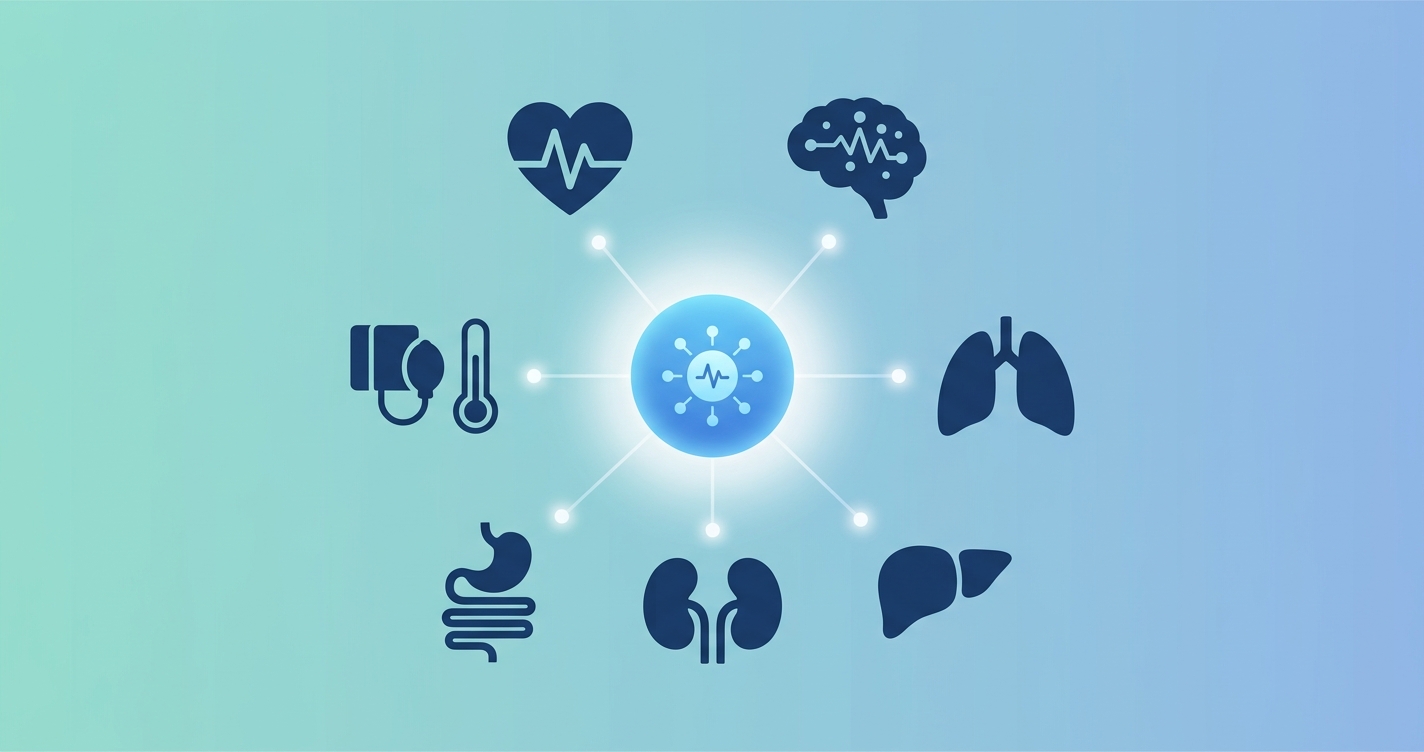
Population-health teams rarely fail because they lack monitoring technology. They fail because they spread the same monitoring effort evenly across a panel where risk is anything but even. The conditions that drive avoidable admissions, emergency visits, and shared-savings leakage are a short list, and they share a useful trait: each one announces deterioration through measurable vital sign changes days before a patient feels sick enough to call. That gap between physiological drift and felt symptoms is exactly where remote vitals monitoring earns its return, and it is why condition selection matters more than vendor selection when an accountable care organization designs a between-visit program.
A 2024 systematic review and multiple health-system reports found remote monitoring programs cutting 30-day readmissions by roughly 50% for heart failure and 25% to 75% for COPD, with one heart-failure program reporting a 52% reduction in monthly cost of care.
Why remote vitals monitoring pays off in specific conditions
Not every chronic diagnosis benefits equally from daily data. Remote vitals monitoring delivers the strongest outcome gains when three conditions are met at once. First, the disease must have a measurable early-warning signal, such as weight gain in fluid overload or a falling oxygen saturation trend in respiratory decline. Second, there must be an effective intervention available in the warning window, such as a diuretic adjustment or an inhaler change, so that earlier detection actually changes the outcome. Third, the cost of a missed event must be high enough that prevention pays for the monitoring. When all three line up, between-visit vitals shift care from reactive to anticipatory.
Contactless vitals tracking sharpens that economics further. Programs built on cuffs, scales, spirometers, and cellular hubs face a persistent enemy: device fatigue. Adherence to wearable and peripheral-device programs tends to decay within the first 90 days, and the patients who stop using devices are often the highest-risk members the program most needs to watch. A camera-based daily check-in that needs no charging, pairing, or cuff placement removes much of that drop-off, which is the difference between a dataset that supports intervention and one that is too sparse to trust.
| Condition | Primary vitals signal | Warning window | Avoidable event targeted |
|---|---|---|---|
| Heart failure | Weight gain, heart rate, blood pressure | 3 to 7 days | Fluid-overload admission |
| COPD | Oxygen saturation, respiratory rate, heart rate | 2 to 5 days | Exacerbation, ED visit |
| Hypertension | Blood pressure trend | Weeks to months | Stroke, cardiac event |
| Type 2 diabetes | Heart rate variability, blood pressure | Variable | Cardiovascular and renal complications |
| Chronic kidney disease | Blood pressure, heart rate | Days to weeks | Progression, fluid overload |
| Atrial fibrillation | Heart rate, rhythm irregularity | Hours to days | Stroke, decompensation |
| Post-discharge multimorbidity | Composite vitals trend | 1 to 30 days | 30-day readmission |
The seven conditions that reward daily monitoring
The list below reflects where the published evidence and the reimbursement math converge most clearly for chronic conditions remote monitoring.
- Heart failure. The flagship use case. Daily weight and hemodynamic trends flag congestion before dyspnea forces an admission, and titration can happen remotely inside the warning window.
- COPD. Oxygen saturation and respiratory rate drift downward for several days before an exacerbation. Early steroid or inhaler intervention here avoids some of the most expensive readmissions in the Medicare population.
- Hypertension. The most prevalent condition a value-based program will manage, with nearly 70% of Medicare beneficiaries diagnosed. Office readings miss masked and white-coat patterns that between-visit vitals expose.
- Type 2 diabetes. More than a third of Medicare Advantage members carry the diagnosis. Vitals monitoring catches the cardiovascular and renal comorbidities that drive cost more than glucose alone.
- Chronic kidney disease. Blood pressure control and fluid status are the levers of progression, and CKD accounts for an outsized share of Medicare spending.
- Atrial fibrillation. Heart rate and rhythm irregularity carry direct stroke risk, and trend visibility supports faster anticoagulation and rate-control decisions.
- Post-discharge multimorbidity. The 30-day window after a hospitalization is where composite vitals trends prevent the bounce-back admission that penalizes shared-savings performance.
Industry applications of contactless vitals tracking
Accountable care organizations
For ACOs, the value of multi-condition monitoring is portfolio risk management. A single contactless check-in stream covering blood pressure, heart rate, respiratory rate, and oxygen saturation lets one care-management team triage across all seven conditions rather than running parallel device programs. Members with two or more of these diagnoses, who represent the bulk of total cost, generate the most actionable between-visit vitals from a single daily interaction.
Chronic care management programs
CCM teams operate on staff time, not hardware. The constraint is how many members a nurse or care coordinator can meaningfully watch. Contactless vitals tracking that produces trend alerts rather than raw data lets coordinators spend their attention on the small subset drifting toward an event, which is the operating model that makes per-member-per-month economics work at scale.
Post-acute and transitional care
Transitional-care programs target the highest-yield window in the entire system. An ACO study of post-hospitalization remote monitoring in heart failure and COPD patients found measurable readmission and mortality benefit, and the post-discharge period is where adherence is fragile and a no-friction check-in keeps the data flowing when it matters most.
Current research and evidence
The evidence base for remote vitals monitoring in these conditions has matured from pilots to system-level results. A 2024 systematic review of telemonitoring for heart failure and COPD reported reduced readmission rates across studies. Health-system programs have published 30-day readmission reductions near 50% for heart failure, with one program also reporting a 52% reduction in monthly cost of care. COPD remote monitoring reductions in readmission range widely, from roughly 25% to as high as 75% depending on program design and baseline risk. A January 2024 analysis associated remote monitoring with lower six-month mortality for both congestive heart failure and COPD patients.
The prevalence data explain why these gains scale. CDC reporting attributes roughly 90% of US health-care spending to people with chronic and mental-health conditions. Within Medicare, hypertension and diabetes are the dominant pairs, and both feed chronic kidney disease, which alone consumes more than $141 billion in Medicare spending. The conditions most responsive to monitoring are also the most expensive, which is the alignment that makes a population-health business case.
One caution runs through the literature: results depend heavily on adherence and on whether alerts connect to a clinical response. Monitoring that generates data nobody acts on produces no outcome change, and monitoring that patients abandon produces no data at all. Both failure modes argue for the lowest-friction capture method a program can deploy.
The future of remote vitals monitoring
Three shifts are reshaping how these seven conditions get monitored. The first is the move from single-condition device kits to composite contactless capture, which suits the multimorbid reality of most high-cost members better than stacking separate peripherals. The second is the maturation of trend analytics, where the value comes from detecting a change in a member's own baseline rather than comparing against a population threshold. The third is reimbursement evolution, as CCM and remote monitoring codes increasingly accommodate software-derived vitals, broadening which data sources qualify for program revenue.
The likely endpoint is a model where daily check-ins are routine, friction is near zero, and the care team's effort concentrates entirely on members whose trends are moving. For value-based organizations, the strategic question is shifting from whether to monitor toward which members, which conditions, and which capture method keeps the highest-risk patients engaged across years rather than weeks.
Frequently asked questions
Which chronic condition gains the most from remote vitals monitoring?
Heart failure consistently shows the largest measured benefit because it combines a clear early-warning signal, weight and hemodynamic change, with an effective remote intervention and a very high cost per avoided admission. COPD follows closely, especially in the post-discharge window.
Why does contactless vitals tracking matter versus traditional devices?
Device-based programs lose adherence over the first months, and the members who stop using cuffs and scales are often the highest risk. Contactless daily check-ins remove charging, pairing, and cuff steps, which keeps data flowing from exactly the patients a program most needs to watch.
Can one program monitor multiple conditions at once?
Yes. Because heart failure, COPD, hypertension, diabetes, kidney disease, and atrial fibrillation share core vital signs, a single contactless check-in stream supports multi-condition monitoring, letting one care team triage a multimorbid panel from one daily interaction.
Does between-visit vitals monitoring reduce hospital readmissions?
Published programs report meaningful reductions, around 50% for heart failure and 25% to 75% for COPD, though results depend on adherence and on alerts connecting to a timely clinical response.
Circadify is building toward this future of population-health monitoring with daily contactless check-ins designed for heart failure, COPD, diabetes, and the other high-cost conditions covered here, without the device fatigue that erodes traditional programs. ACOs and value-based teams evaluating a between-visit strategy can review the chronic care management program overview at circadify.com/solutions/chronic-care-management.